
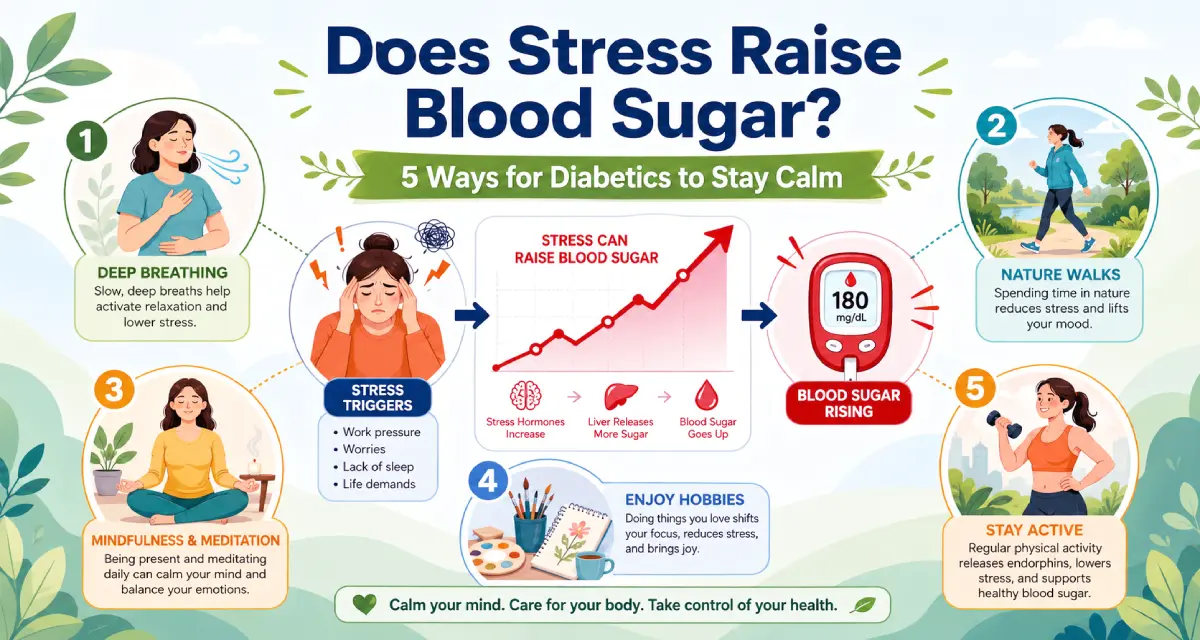
Did you know that finding the answer to the question “Does stress raise blood sugar?” is the first step toward better health for anyone living with diabetes? When you face physical or emotional stress, your body triggers a “fight or flight” response that directly impacts your glucose levels. In this comprehensive guide, we will discuss how stress management serves as a pillar of diabetes care. By the end of this discussion, you will have mastered five proven strategies to stay calm and keep your blood sugar levels within a healthy range. Above all, you need to know the methods of controlling diabetes, since you are a diabetic. I have tried to discuss based on my 20 years of experience with diabetes.
The Biological Link: How Stress Affects Blood Sugar
Many people wonder exactly how stress affects blood sugar levels during a busy workday or a personal crisis. When you feel stressed, your body releases hormones like cortisol and adrenaline. These hormones signal the liver to release extra glucose for energy. For a diabetic person, the body cannot process this sudden sugar spike effectively, leading to hyperglycemia.
Understanding the Connection: Does Stress Raise Blood Sugar Levels Daily?
Science confirms that mental pressure is just as significant as eating a sugary snack. If you consistently face high-stress situations, your A1C levels may rise even if you follow a strict diet. Understanding this connection allows you to take proactive steps in your daily routine.
How to Stop Stress Raising Blood Sugar: 5 Practical Ways
1. Practice Mindful Meditation

Meditation significantly reduces cortisol levels. Spend 10 minutes each morning in a quiet place to center your thoughts. This simple practice helps stabilize your heart rate and increase insulin sensitivity. By calming your nervous system, you can reduce the ‘dawn phenomenon’—that frustrating morning spike in blood sugar that many diabetics experience. Studies have shown that regular mindfulness doesn’t just reduce stress; it improves your body’s ability to use insulin more effectively. Even if you don’t have time, these few minutes of silence act as a natural reset button for your metabolic health.
2. Implement the 4-7-8 Breathing Technique
When anxiety suddenly arises, take deep breaths. Inhale for 4 seconds, hold for 7 seconds, and exhale for 8 seconds. This physical action forces your nervous system to relax, which prevents a sudden spike in blood glucose levels. This specific rhythm acts as a natural sedative for the nervous system. By slowing down your breathing, you signal your brain to reduce adrenaline production—the hormone that prompts the liver to release excess sugar into your blood. For many diabetics, just four repetitions of this exercise can slow a rapid heart rate and provide an immediate sense of control. It’s a generally free and scientifically proven way to do it in any quiet place—from a stressful meeting to a restless night in bed—to keep your metabolic health on track.
3. Engage in Regular Low-Impact Exercise
In fact, diabetics should know that yoga and walking are great stress relievers. (As we discussed in our guide on ‘How many minutes or steps should a diabetic walk per day’, consistency is key.) Exercise uses up excess glucose released into the blood due to stress hormones. Physical activity works like a double-edged sword against diabetes; on the one hand, it reduces sudden spikes in blood sugar, and on the other hand, it also reduces long-term insulin resistance caused by chronic stress.
Yoga, in particular, focuses on the mind-body connection, which helps you move from a ‘stressed’ sympathetic nervous system to a ‘relaxed’ parasympathetic one. This shift is crucial because it prevents the liver from producing excess glucose in moments of stress. Whether it’s a 35-minute brisk walk or a few light yoga poses, your exercise sends a clear signal to the brain that the danger is over, which helps your blood sugar levels return to their normal levels naturally. I’m a firm believer in walking. I have been walking for 35-40 minutes at a certain time of the day for 20 years. As a result, I live a healthy life. While managing mental pressure is vital, physical activity remains a pillar of health. You can learn more about the ideal routine in our guide on how many steps a diabetic should walk daily to maximize your results.
4. Prioritize Sleep Hygiene
Lack of sleep is one of the main causes of physical stress in a person. And if you have diabetes, that’s no joke. Aim for 6-8 hours of good sleep per day. A well-rested body can handle emotional stress much better than a tired body. When you lack sleep, your body has trouble processing insulin, which results in higher-than-normal blood sugar levels the next morning. Lack of sleep also increases levels of ghrelin—the hunger hormone—which often leads to cravings for sweets and overeating, creating a vicious cycle for diabetics. Good sleep helps your brain flush out toxins and restores your hormonal balance, ensuring your cortisol levels stay stable throughout the day. By prioritizing a regular sleep schedule and creating a dark, cool environment for rest, you can build your body’s ultimate defense against both physical and mental stress.
5. Use Grounding Techniques in Nature

Another effective way to lower blood pressure is to spend time outdoors. This greatly reduces mental fatigue. Walking barefoot on grass or sitting in a park can also naturally lower your blood pressure and stabilize blood sugar levels. This practice, often called ‘grounding’, helps neutralize the positive charge that builds up in your body, which reduces chronic inflammation and often complicates diabetes management. Fresh air and natural greenery take your body from an ‘alert’ state to a ‘recovery’ state, helping your metabolic processes function more efficiently. By making nature a regular part of your daily routine, you can create a peaceful haven for your mind, which will help keep your glucose levels more predictable and stable throughout the week. A stable mind works best with a stable diet; pairing stress relief with the best fruits for diabetic patients ensures your body has the right nutrients to fight glucose spikes naturally.
Comparison: Physical Stress vs. Emotional Stress
| Feature | Physical Stress (Illness/Injury) | Emotional Stress (Work/Anxiety) |
| Primary Hormone | Adrenaline & Cortisol | Cortisol |
| Impact on Glucose | Rapid and Sharp Increase | Gradual but Persistent Rise |
| Management Focus | Medical care & Hydration | Relaxation & Mindfulness |
| Duration | Short-term (usually) | Can become Chronic |
Practical Ways to Stay Calm: Does Stress Raise Blood Sugar Long-term?
To truly see how stress affects blood sugar, you must test your levels during stressful moments. Keep a log of your emotions alongside your glucose readings. Over time, you will see a clear pattern: a calmer mind leads to a healthier body. For more expert advice, you can check the American Diabetes Association guidelines on mental health.
Conclusion
Stress management is just one part of your wellness journey. Explore our other comprehensive diabetic care resources to build a lifestyle that keeps your blood sugar levels in check 24/7. Managing diabetes is not just about counting carbs; it is about managing your mind. So, does stress raise blood sugar? Yes, it certainly does. However, by using these five ways to stay calm, you can take back control of your health. Start with one technique today and watch how your glucose levels respond to a more peaceful lifestyle. Although I am not a doctor, I can only offer advice based on my 20 years of experience with diabetes. I hope you find this article helpful.