

An ergonomic kneeling chair vs under-desk elliptical comparison is the ultimate dilemma for remote workers who want to fix their posture, boost physical health, and manage diabetes effectively from home. The modern workspace forces many professionals to remain completely sedentary for eight to ten hours every day. This lack of movement reduces natural blood circulation, compresses the lower back, and slows down metabolic rates. Over time, traditional office chairs cause severe muscle stiffness and weaken your core support system. To solve this problem, health-conscious individuals are choosing active desk equipment to transform their working environment.
However, these two popular devices approach workspace wellness from completely opposite directions. A kneeling posture stool focuses primarily on body alignment and passive structural discipline. On the other hand, a compact under-desk pedal trainer focuses on continuous aerobic motion and calorie burning. Choosing the correct tool requires a deep evaluation of your body’s specific health vulnerabilities. This comprehensive guide breaks down the structural mechanics, musculoskeletal impacts, and metabolic advantages of both devices to upgrade your office health.
Side-by-Side Comparison: Active Seating vs. Desk Cardio
To provide immediate clarity, here is a breakdown of the core features, targeted muscle groups, and wellness advantages of both workspace solutions:
- Primary Focus: * Ergonomic Kneeling Chair: Spinal alignment, posture training, and core support.
- Under-Desk Elliptical: Cardiovascular health, calorie burn, and circulation.
- Active Movement: * Ergonomic Kneeling Chair: Low (mostly static isometric muscle holding).
- Under-Desk Elliptical: High (continuous low-impact orbital pedaling).
- Blood Sugar & Diabetes Impact: * Ergonomic Kneeling Chair: Indirect (improves muscle engagement and core strength).
- Under-Desk Elliptical: Direct (stimulates rapid leg muscle glucose uptake).
- Calorie Burning Rate: * Ergonomic Kneeling Chair: Minimal to mild structural energy expenditure.
- Under-Desk Elliptical: Moderate to high physical calorie burn (120-180 kcal/hr).
- Vascular Circulation Pump: * Ergonomic Kneeling Chair: Opens hip pelvis angle to eliminate deep groin pressure.
- Under-Desk Elliptical: Acts as a secondary heart pump to prevent leg swelling.
- Space & Footprint: * Ergonomic Kneeling Chair: Very compact; hides fully under standard writing desks.
- Under-Desk Elliptical: Requires specialized vertical knee clearance under the desk.
The Structural Mechanics of Kneeling Posture Stools
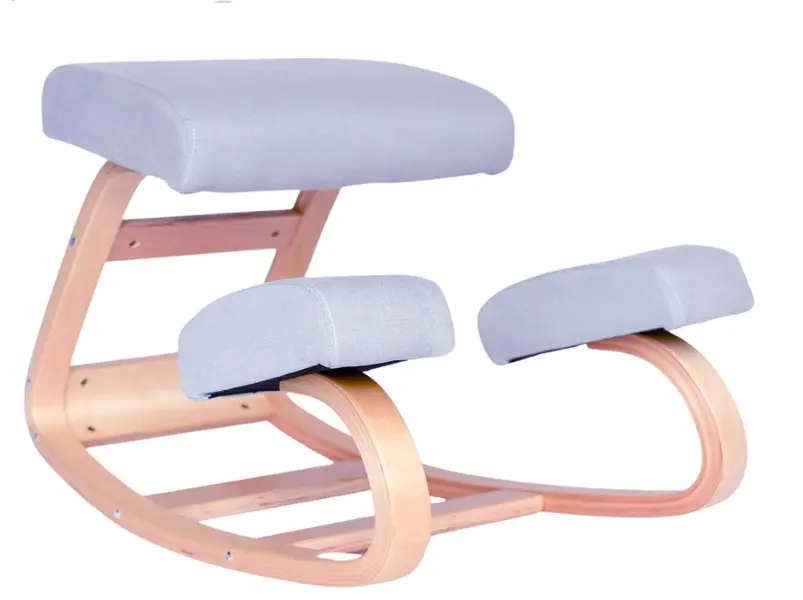
An active posture stool changes how gravity interacts with your spine while you are typing. Standard office furniture features a flat, 90-degree seat base that forces the human pelvis to tilt backward unnaturally. This structural flaw flattens the essential lumbar curve of your lower back, causing extreme pressure on your intervertebral discs. In addition, this slouched position forces the shoulders to round forward and stresses the neck muscles.
However, a kneeling chair solves this issue by utilizing an innovative forward-tilted seat frame. This calculated angle, usually set between 20 and 30 degrees, naturally pushes your pelvis forward into an optimal position. Consequently, your spine automatically adopts its natural, healthy S-curve alignment. This structural correction completely eliminates the heavy load on your lumbar region. Furthermore, your upper back, neck, and shoulders balance effortlessly over your hips, which drastically reduces tension headaches and workday shoulder fatigue.
In addition to correcting alignment, these chairs feature supportive shin or knee pads to distribute your body weight evenly. This design ensures that your lower limbs share the seating load safely with your pelvic bones. Therefore, you do not experience the typical crushing pressure on your tailbone that traditional seating causes.
Building Core Strength Through Passive Workspace Seating
Because premium posture chairs completely lack a traditional rear backrest, your upper body must become entirely self-supporting. This structural layout means your trunk cannot simply collapse into a plastic frame during long tasks. Instead, your deep stabilizing muscles must remain active to keep your body balanced over the forward-tilted frame.
This layout forces continuous, low-level isometric contractions inside your rectus abdominis, obliques, and erector spinae muscles. Moreover, this constant engagement serves as a natural fitness workout for your stomach and back. Instead of allowing your core muscles to weaken from sitting still, your workspace becomes a safe zone for functional strengthening.
Over time, this continuous activity builds incredible physical endurance in your lower trunk. Consequently, your body develops a natural ability to maintain great posture even when you are away from your desk. In addition, a strong core acts as a protective shield for your lumbar discs, preventing the onset of chronic lifting injuries or sudden muscle spasms at home. For comprehensive wellness monitoring alongside core strength, comparing advanced tracking devices like the Apple Watch Series 11 vs RingConn Gen 2: Best Wearables for Diabetes & Health Tracking in Seniors can help you seamlessly manage your daily health metrics.
The Cardiovascular Advantages of Seated Desk Ellipticals
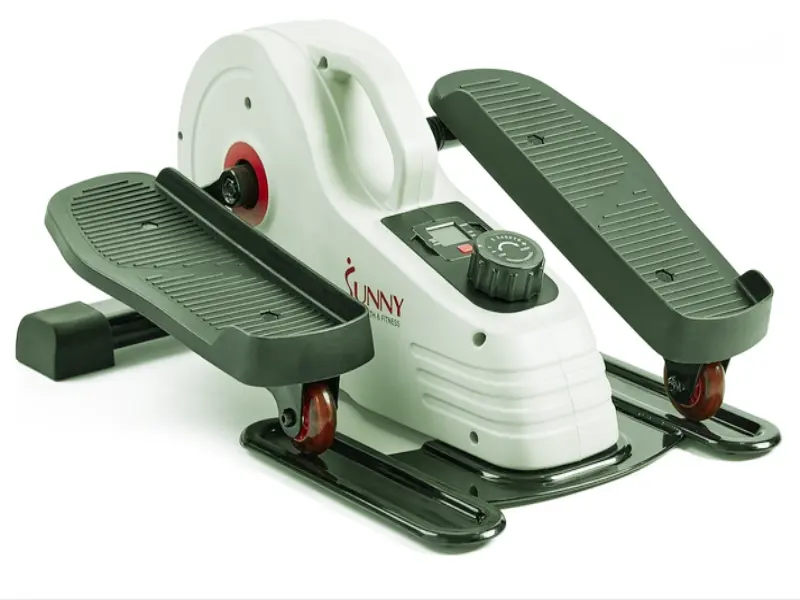
An under-desk pedal trainer takes an entirely dynamic path toward improving your physical health. Rather than correcting your sitting position mechanically, this machine rests directly beneath your computer desk. This layout allows you to perform continuous, smooth leg pedaling while sitting comfortably in a standard office chair.
This continuous lower-body rotation targets your largest muscle groups, including the quadriceps, hamstrings, and calves. Moreover, because this exercise happens while you are seated, it eliminates the dangerous joint impact linked with running or treadmill walking. This makes it an incredibly safe option for individuals who need continuous motion but suffer from knee stiffness.
Furthermore, this continuous muscular movement stimulates your cardiovascular system gently throughout the day. It increases your resting heart rate to a healthy zone, which helps strengthen your heart muscle and enhances lung capacity. In addition, this steady-state cardio exercise helps prevent the mental fatigue and brain fog that usually happens after hours of static typing. Consequently, your productivity increases because your brain receives a steady supply of fresh oxygen and essential nutrients.
The Critical Role of Desk Pedaling in Diabetes Management (Ergonomic Kneeling Chair vs Under-Desk Elliptical)
Remaining completely still for multiple hours causes your body’s essential metabolic processes to slow down drastically. When large leg muscles stay inactive, the body produces less lipoprotein lipase, which is a key enzyme responsible for burning fats and processing blood sugars. For individuals managing diabetes or insulin resistance, this mechanical inactivity is highly dangerous.
However, operating an under-desk elliptical directly counters this metabolic slowdown. The continuous movement of your lower limbs acts as a highly effective tool for proactive diabetes management. Active contracting muscles require immediate energy to rotate the magnetic flywheel. Consequently, your leg muscles draw down surplus glucose directly from your bloodstream to use as fuel, bypassing the need for extra insulin production.
Furthermore, this continuous muscular consumption improves your overall insulin sensitivity over time. Using the pedal machine for just thirty minutes after eating can drastically flatten your post-meal blood sugar spikes. In addition, this consistent energy burning helps reduce overall body fat levels, which lowers systemic inflammation and protects your pancreas. Therefore, adding a pedal trainer to your office setup provides a powerful medical advantage that protects your metabolic longevity.
Vascular Health: Boosting Blood Flow and Preventing Numbness
Optimizing deep blood circulation in the lower limbs is a vital health requirement, particularly for diabetic individuals prone to peripheral neuropathy. Standard sitting cuts off crucial blood pathways in the thighs and behind the knees, which can cause fluid retention and dangerous swelling in the ankles.
Fortunately, an under-desk elliptical serves as an exceptional vascular pump for home recovery therapy. The continuous contraction of your calf muscles acts like a secondary heart, squeezing the deep veins in your lower legs. This physical compression forces blood to move efficiently back up toward your heart, preventing pooling and dangerous vascular stagnation. In addition, this fresh oxygen delivery keeps your peripheral nerves perfectly nourished and healthy.
However, an ergonomic kneeling chair approach is completely different. It opens up the pelvic area to ensure unrestricted blood flow through the deep groin arteries. This is an incredible benefit for hip health. Yet, because a kneeling chair places structural pressure on your shins and keeps the knees bent, it does not provide the active pumping motion of a pedal trainer. Therefore, individuals who suffer from severe cold feet, swelling, or poor circulation will achieve better vascular relief using a seated elliptical device.
Comparing Muscle Fatigue and Workplace Productivity (Ergonomic Kneeling Chair vs Under-Desk Elliptical)
Balancing daily physical exercise with high-level professional productivity requires a smart selection of equipment. A kneeling posture stool requires an initial adaptation phase because your core muscles must learn to support your weight without a backrest. Consequently, you might experience minor muscle tiredness during the first week of use.
However, once your body adapts, a kneeling chair becomes a highly efficient tool that does not distract you from work. Because your upper body stays completely stationary, you can type quickly, use your mouse precisely, and participate in important video meetings without any awkward body movement. In addition, the improved spinal alignment keeps you feeling awake and alert, which naturally eliminates midday drowsiness.
Conversely, an under-desk elliptical introduces constant rhythmic movement into your workspace. For many remote workers, this continuous motion channels nervous energy and actually improves focus during long reading tasks. It keeps your body warm and energized. However, if you increase the magnetic resistance too high, the pedaling motion can cause your upper body to sway slightly. This side-to-side movement can make high-precision design work or professional typing sessions slightly more difficult.
Space Requirements and Home Office Workspace Layouts
Practical space constraints are a major deciding factor when updating your remote work setup. Most ergonomic kneeling chairs feature a minimalist, highly compact design frame. Because they lack tall backrests or wide armrests, these stools can slide completely underneath your computer desk when your workday ends, keeping your office looking tidy.
In addition, kneeling chairs work exceptionally well with standard, fixed-height writing desks. They position your body at a natural height that matches normal keyboard surfaces perfectly. However, you must ensure the seat height is adjusted correctly so your shins rest comfortably on the lower pads without putting pressure on your kneecaps.
On the other hand, an under-desk elliptical has a much heavier footprint due to its internal metal flywheel and magnetic tension mechanisms. While the machine stays flat on the floor, it requires significant vertical leg room. As your feet rotate, your knees will lift up and down along an orbital path. Consequently, if you use a standard fixed desk, your knees might repeatedly hit the underside of your desk frame. To prevent this painful issue, you often need to pair a desk elliptical with a height-adjustable standing desk.
Frequently Asked Questions (FAQs) About Ergonomic Kneeling Chair vs Under-Desk Elliptical
Ans. If you have severe knee arthritis or joint injuries, a kneeling chair might not be the best option. Even though it distributes weight through your shins, your knees remain in a fixed, bent position for long periods. Consequently, this fixed angle can strain vulnerable joint cartilage. For individuals with knee issues, an under-desk elliptical is a much safer alternative because its smooth, zero-impact pedaling lubricates joints without placing static pressure on them.
Ans. The total calories you burn depends on your body weight, pedaling speed, and resistance level. However, on average, most users burn between 120 to 180 calories per hour of moderate pedaling. In addition, this is significantly higher than sitting in a standard chair, which burns only 60 to 70 calories. Over a full workday, this extra movement creates a great calorie deficit for healthy weight management.
Ans. An ergonomic kneeling chair is an exceptional tool for relieving lower back pain because it removes the compression caused by slouching. By restoring natural spinal alignment, it unloads pressure from your lumbar discs immediately. However, a chair is just one part of a holistic recovery plan. To fully heal chronic back issues, you must also incorporate regular stretching, movement breaks, and core exercises into your daily routine.
Ans. High-quality under-desk ellipticals use magnetic resistance systems that operate almost silently. The faint sound is easily filtered out by standard computer microphones or headsets. Moreover, the smooth pedaling quickly becomes a natural habit. Consequently, most professionals can type, analyze data, and speak comfortably on phone calls without any mental distraction or drop in work quality.
The Final Verdict: of Ergonomic Kneeling Chair vs Under-Desk Elliptical
Ultimately, choosing between an ergonomic kneeling chair and an under-desk elliptical depends entirely on identifying your body’s primary physical weaknesses during the workday. Both tools offer incredible advantages, but they solve completely different health problems—making it essential to pair your active workstation setup with regular movement breaks as recommended by the Mayo Clinic.
You should select the ergonomic kneeling chair if your primary complaints are chronic slouching, rounded shoulders, lower back compression, and a weak core. It is the absolute best device for structural spinal discipline, upper body pain relief, and maintaining a clean, minimalist office appearance.
Conversely, you should choose the under-desk elliptical if your primary goals are maximizing daily calorie expenditure, improving blood circulation, managing diabetes, and protecting sensitive joints through smooth motion. It provides the ideal solution for cardiovascular activation and metabolic health.
In addition, many successful remote professionals choose to integrate both tools into a healthy daily rotation. For instance, you can use a kneeling chair in the morning to train your posture and focus your mind. Then, you can switch to an under-desk elliptical in the afternoon to boost your blood circulation, activate your metabolism, and defeat post-lunch fatigue. To maximize your workspace wellness, you can also combine these tools with simple desk exercises and stretching routines to keep your joints flexible throughout the day.