
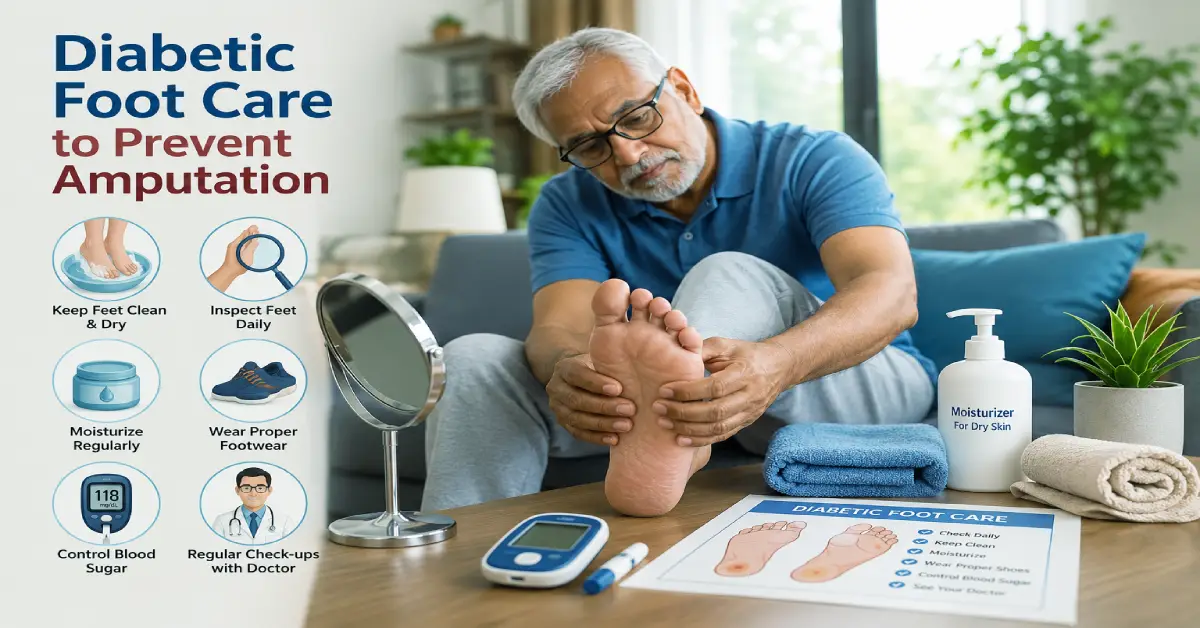
Comprehensive diabetic foot care to prevent amputation is one of the most critical aspects of managing your health when living with diabetes. Every year, thousands of individuals face severe complications simply because minor foot issues go unnoticed. High blood sugar levels can damage your nerves and blood vessels over time. This makes your feet highly vulnerable to infections, deep ulcers, and long-term tissue damage.
Fortunately, most diabetes-related foot complications are entirely preventable. By establishing a structured daily routine, choosing the right footwear, and monitoring early warning signs, you can protect your mobility and maintain your independence. However, this ultimate guide breaks down everything you need to know about keeping your feet healthy, safe, and free from serious medical risks.
Why Diabetes Increases the Risk of Foot Amputation?
To understand why routine care is so important, it helps to know how diabetes physically affects your lower extremities. High blood glucose acts silently over months and years, gradually altering how your body heals and senses pain. If you’re looking for safe ways to stimulate blood flow and manage these effects, you can also check out our guide on manual vs electric foot massagers for diabetics.
Understanding Peripheral Neuropathy (Nerve Damage)
Prolonged high blood sugar levels cause a condition known as peripheral neuropathy, which translates to chronic nerve damage in your legs and feet. Specifically, this nerve damage gradually reduces or completely eliminates your ability to feel pain, heat, or cold.
If you step on a sharp tack, develop a blister from tight shoes, or sustain a small cut, you might not feel it at all. When an injury goes unnoticed, it continues to worsen under continuous pressure. In addition, a minor scratch can rapidly evolve into a deep, open sore before you even realize there is a problem.
Poor Blood Circulation and Slow Healing
Diabetes also leads to peripheral artery disease, which narrows the blood vessels supplying your legs and feet. Consequently, this restriction means less blood, oxygen, and vital nutrients reach your lower extremities.
Your body relies heavily on healthy blood flow to repair damaged tissues and fight off invading bacteria. As a result, when circulation is compromised, a simple scratch takes weeks or months to heal. This delayed healing process gives bacteria a perfect environment to multiply, turning a simple ulcer into a severe infection like gangrene, which often requires surgical amputation. To understand how poor circulation affects healing and risks, read more detailed medical insights on the Mayo Clinic.
Diabetic Foot Care to Prevent Amputation: Daily Routine
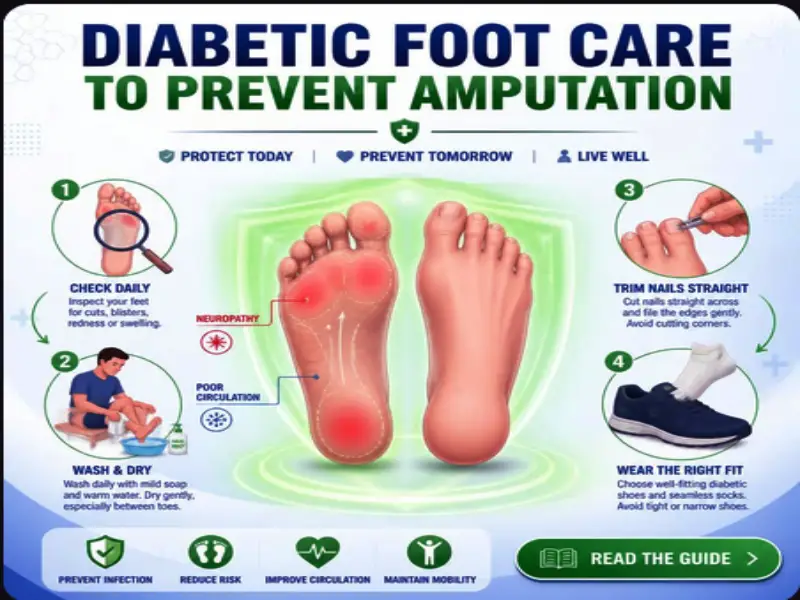
Consistency is your absolute best defense against severe complications. Spending just five minutes every day inspecting and treating your feet can save your limbs. Incorporate these simple steps into your daily schedule to ensure maximum safety.
Diabetic Foot Care to Prevent Amputation: Daily Inspection
You must inspect every single inch of your feet every evening without exception. Look closely for cuts, blisters, redness, swelling, or localized warmth. Pay extra attention to the soles of your feet and the delicate areas between your toes.
Since looking at the bottom of your feet can be physically difficult, place a small plastic mirror on the floor or ask a family member to assist you. Never ignore a tiny spot of redness, as it could be the early sign of a deep pressure ulcer forming beneath the skin surface. To safely boost your blood flow and prevent these issues, you can explore our full review on the Best Vibration Plate for Lymphatic Drainage and Diabetic Circulation: Top 5 Home Therapy Picks.
Proper Washing and Drying Protocols
Wash your feet daily using lukewarm water and mild, neutral soap. Before placing your feet in the water, always test the temperature using your elbow or a thermometer to prevent accidental burns, as your feet cannot gauge temperature accurately.
Avoid soaking your feet for prolonged periods because soaking softens the skin too much, making it crack and peel easily. After washing, dry your feet gently by patting them with a soft towel. Ensure the areas between your toes are completely dry, as damp spaces encourage dangerous fungal infections like athlete’s foot to thrive.
Safe Nail Trimming Practices
Trimming your toe nails requires careful attention to prevent ingrowing nails or accidental skin clips. Therefore, always cut your nails straight across using a clean clipper. Furthermore, never round the corners or dig into the sides of your toes to remove nails.
Smooth down any sharp, jagged edges using a gentle emery board or nail file. If your nails are very thick, brittle, or hard to reach, do not try to cut them yourself using sharp scissors. Instead, visit a professional podiatrist who specializes in managing diabetic foot health safely.
Intelligent Moisturizing Techniques
The nerve damage associated with diabetes can stop the sweat glands in your feet from working properly. As a result, this lack of natural moisture causes the skin on your heels to become excessively dry, rough, and prone to deep, painful cracks.
Apply a thin layer of specialized diabetic moisturizing lotion or petroleum jelly over the tops and bottoms of your feet daily. However, you must never apply lotion directly between your toes. Trapping excess moisture in those tight spaces creates a breeding ground for bacterial and fungal growth. For more essential tips on managing joint health and recovery while keeping your skin secure, check out our comprehensive review on the 3 Best Ice Machines for Knee Surgery: Diabetic Safety & Recovery Guide.
Essential Footwear Rules for Diabetics
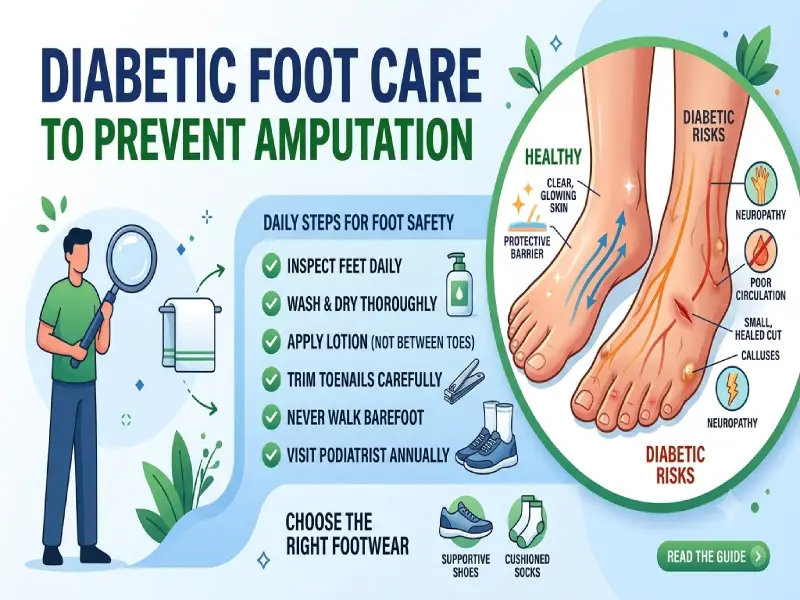
The right shoes act as a protective shield for fragile skin. Wearing inappropriate or poorly fitting footwear is a leading cause of diabetic foot ulcers.
- Never Walk Barefoot: Always wear shoes or protective slippers, even when walking indoors on soft carpets. A tiny piece of glass, a dropped pin, or a stray splinter can easily puncture your skin without your knowledge.
- Inspect Your Shoes Daily: Before sliding your feet into your shoes, always shake them out and feel inside with your hand. Look for small pebbles, torn linings, sharp seams, or rough edges that could rub against your skin and cause a blister.
- Choose Seamless Diabetic Socks: Wear clean, dry socks made of moisture-wicking materials like cotton or bamboo blends. Avoid tight elastic bands that constrict blood circulation, and choose seamless designs to eliminate friction on your toes.
- Buy Shoes in the Afternoon: Human feet naturally swell slightly as the day goes on. Buying new shoes in the late afternoon ensures they will remain comfortable all day long and will not squeeze your feet tightly during activity.
Comparing Home Foot Therapy Tools for Diabetics
Many individuals use different tools at home to maintain their comfort and health. However, because diabetes alters sensation and blood flow, you must evaluate these tools carefully before incorporating them into your routine.
| Therapy Device / Method | Primary Health Benefits | Potential Risks for Diabetics | Safety Guidelines |
| Manual Foot Massager | Stimulates blood flow, relieves muscle tension, low cost. | Excessive friction can cause blisters on fragile skin. | Use gently with seamless socks; never apply heavy pressure on bare skin. |
| Electric Foot Massager | Promotes deep relaxation, enhances lower body circulation. | Built-in heat settings can cause severe burns without pain awareness. | Turn off the heat function completely; limit sessions to 15 minutes max. |
| Automated Cold Therapy | Reduces swelling and inflammation after joints or bone surgery. | Extreme cold can worsen poor circulation and damage skin tissues. | Always place a thick protective towel cloth barrier between the cooling wrap and bare skin. |
| Wobble/Balance Boards | Strengthens ankle joints, improves balance and stability. | Slipping or losing balance can lead to sudden foot or ankle trauma. | Always use near a sturdy wall or rail; wear supportive, non-slip diabetic shoes. |
When to See a Doctor Immediately
Minor foot problems can escalate into life-threatening emergencies within 24 to 48 hours for someone living with diabetes. You should never attempt to treat corns, calluses, or ingrown nails at home using over-the-counter chemical removers or sharp razor blades. Along with proper home care, wearing protective footwear like the Best Walking Shoes for Diabetic Elderly Women: 2026 is crucial to prevent friction and long-term complications.
Contact your healthcare provider or a specialized podiatrist immediately if you notice any of the following warning signs:
- An open sore, cut, puncture wound, or blister that shows no signs of healing after 24 hours.
- Increasing redness, swelling, or red streaks spreading upward from your toes or foot.
- Foul-smelling drainage, pus, or moisture leaking from a crack or a wound.
- Skin that turns a dark blue, purple, or black color, which indicates localized tissue death.
- A localized area on your foot that feels unusually hot to the touch compared to the surrounding skin.
Frequently Asked Questions (FAQs)
Learning the right steps of diabetic foot care to prevent amputation is the best way to keep your feet healthy and safe.
Ans. Yes, a simple blister can lead to amputation if left untreated. Because of peripheral neuropathy, you might continue walking on a blister, forcing it to break open and turn into an ulcer. If your blood circulation is poor, the body cannot heal the ulcer quickly, allowing severe infections to spread to the bone.
Ans. You should schedule a professional foot examination with a podiatrist at least once every year, even if your feet look perfectly healthy. If you have a personal history of foot ulcers, nerve damage, or poor circulation, your doctor will likely recommend visits every three to six months.
Ans. No, heating pads, hot water bottles, and electric blankets are highly dangerous for individuals with diabetes. Because nerve damage reduces your ability to perceive extreme temperatures, these devices can easily cause severe third-degree burns on your skin before you even feel the heat.
Ans. The best socks are specially designed diabetic socks made from non-binding, moisture-wicking materials like acrylic, merino wool, or bamboo. They should have completely seamless toes to minimize friction and extra padding along the soles to cushion your steps.
Ans. No, you should never cut corns or calluses yourself using sharp instruments like scissors, clippers, or razor blades. Cutting into the hardened skin can easily cause a deep wound that is highly susceptible to infection. Let a podiatrist handle callus removal safely in a sterile clinic environment.
Conclusion & Summary
Following a structured routine for diabetic foot care to prevent amputation is essential for your long-term mobility. By taking these simple daily steps, you can significantly reduce the risk of severe infections.
Practicing careful diabetic foot care to prevent amputation is a lifelong commitment that directly protects your overall quality of life. By spending a few moments each day washing, drying, and inspecting your feet, you can stop minor issues from developing into severe medical emergencies. Always wear protective shoes, avoid extreme temperatures, and consult your medical team at the very first sign of an unusual skin change. Your feet carry you through life, so treat them with the daily care, patience, and protection they truly deserve. For more official guidelines and resources, you can visit the American Diabetes Association (ADA).