
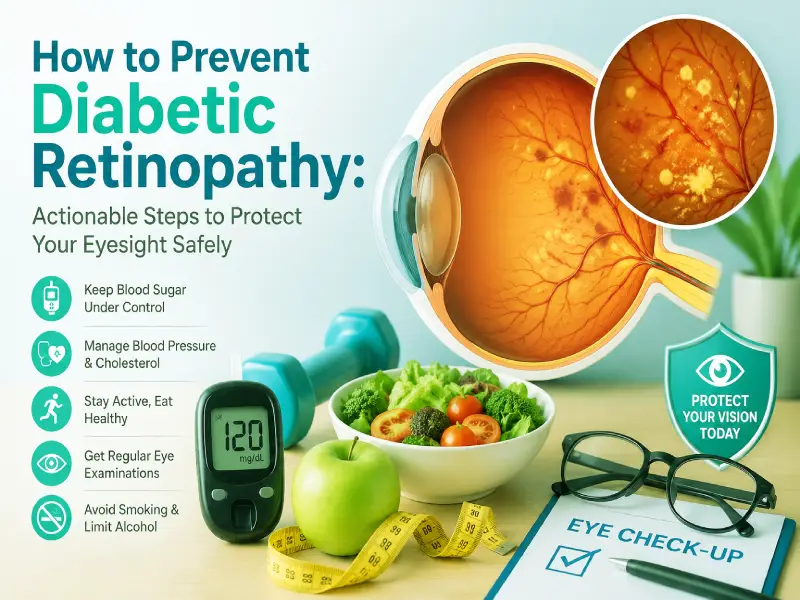
Learning how to prevent diabetic retinopathy is one of the most critical aspects of long-term diabetes management and maintaining clear vision. Over time, high blood glucose levels can cause microvascular damage to the delicate blood vessels inside your retina. This serious medical condition stands as a leading cause of preventable blindness among working-age adults globally. Therefore, understanding how to implement daily protective strategies is essential to preserve your eyesight.
Many newly diagnosed individuals feel overwhelmed by the potential long-term complications of chronic illness. However, the clinical reality is highly reassuring. Medical consensus demonstrates that you can drastically lower your risk of vision loss through proactive daily choices, targeted monitoring, and structural lifestyle adjustments. In this comprehensive evidence-based guide, we will break down the absolute best ways to prevent diabetic retinopathy and ensure your eyes remain perfectly healthy for decades to come.
Why Blood Sugar Control is Key to Prevent Diabetic Retinopathy

To effectively protect your eyes, you must first understand the physiological mechanism behind metabolic vision damage. The retina is a thin layer of light-sensitive tissue lining the back of your eye. It requires a continuous, stable supply of oxygenated blood through a complex network of tiny capillaries.
When your blood sugar stays consistently high, these microvascular pathways become damaged. Consequently, the capillary walls weaken, leading to microscopic leaks of fluid, lipids, and blood directly into the retinal tissue.
In its advanced stages, the eye attempts to save itself by growing new, fragile blood vessels. Unfortunately, these abnormal vessels rupture easily, causing severe scar tissue formations and retinal detachment. Therefore, your primary line of defense is to stop this cellular damage before it ever alters your visual acuity.
1. Core Clinical Targets to Prevent Diabetic Retinopathy
| Metric Name | Target Level | Primary Benefit to Your Retina |
| A – HbA1c Levels | Keep below 7% | Minimizes fragile capillary lining damage. |
| B – Blood Pressure | Maintain under 130/80 mmHg | Stops high pressure from leaking/bursting eye vessels. |
| C – Cholesterol | Control lipids | Prevents fatty exudate build-up in the macular tissue. |
The foundational pillar to prevent diabetic retinopathy involves meticulous management of your core clinical markers. Endocrinologists often refer to this framework as the “ABCs” of metabolic health.
A is for HbA1c (Glycated Hemoglobin)
Your HbA1c test reflects your average blood glucose levels over the past three months. Clinical trials have conclusively proven that maintaining an HbA1c level below 7.0% reduces the risk of developing microvascular eye complications by over 70%. Additionally, stable blood sugar stops the sudden fluctuations that cause temporary blurry vision.
B is for Blood Pressure
High blood pressure (hypertension) exerts immense physical force on your fragile retinal vessels. If your blood pressure is chronically elevated, it forces your weakened eye capillaries to leak fluids much faster. Consequently, keeping your blood pressure strictly under 130/80 mmHg is just as vital as managing your glucose finger-pricks.
C is for Cholesterol
High levels of low-density lipoprotein (LDL) cholesterol can cause fatty deposits called hard exudates to accumulate inside your retina. Therefore, balancing your lipid profiles through a clean diet or medical guidance adds an extra protective shield over your macular health.
2. Schedule Annual Comprehensive Dilated Eye Exams
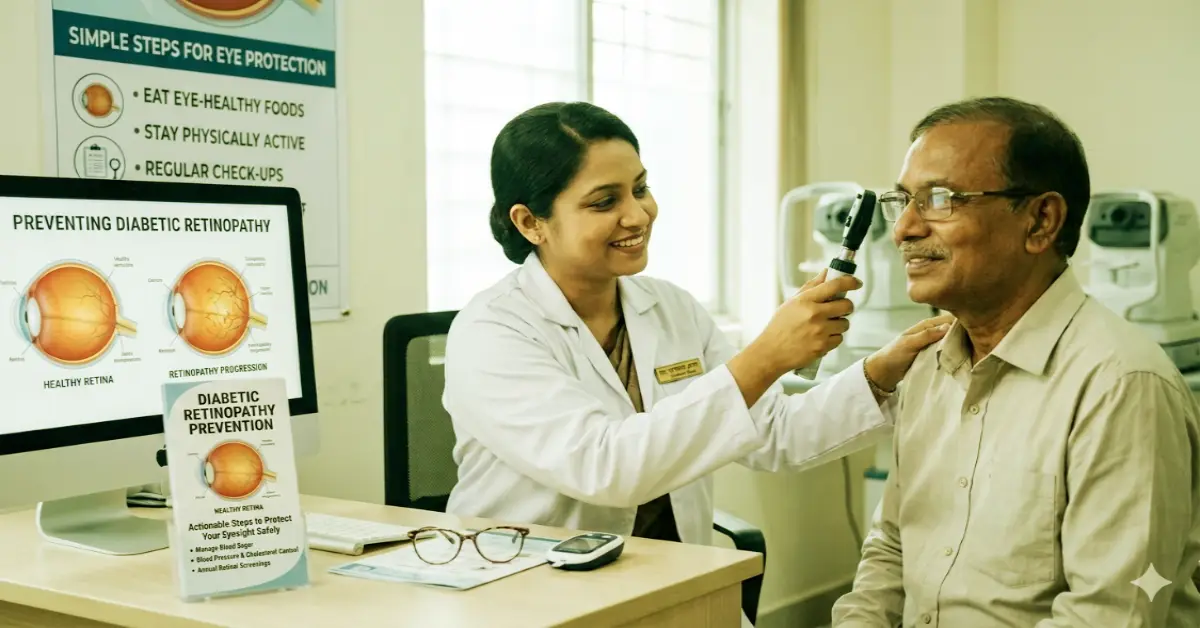
You cannot rely on your daily vision quality to determine whether your eyes are safe. In its early stages, diabetic retinopathy is completely asymptomatic. You could have multiple micro-aneurysms leaking fluid into your retina right now without noticing a single change in your eyesight.
Therefore, scheduling a comprehensive dilated eye exam at least once every year is a non-negotiable medical rule.
Important Clinical Note: A standard vision check for new glasses or a quick snapshot at an optical shop is not enough. A licensed ophthalmologist or optometrist must use specialized widening drops to expand your pupils. This dilation allows them to inspect the entire surface area of your optic nerve and retinal blood vessels using a high-magnification biomicroscope. Early detection via dilation allows for preventative laser treatments long before permanent vision loss occurs.
3. Adopt a Low-Glycemic, Eye-Healthy Diet
Your nutritional patterns dictate the cellular health of your eyes. To prevent diabetic retinopathy, your daily meal plans should focus on minimizing sudden glucose surges while flooding your body with microvascular antioxidants.
Prioritize Retinal Antioxidants
Your eyes require specific vitamins to combat oxidative stress. Specifically, lutein and zeaxanthin are two powerful carotenoids that accumulate directly in the macula to filter harmful light waves and protect cell membranes.
- Actionable Step: Incorporate at least two servings of dark leafy greens (such as spinach or kale) into your weekly diet.
- Vitamin C and E: Citrus fruits, almonds, and sunflower seeds contain vital micronutrients that strengthen blood vessel walls.
Eliminate Ultra-Processed Carbohydrates
Refined sugars, white flour, and sugary soft drinks cause rapid spikes in insulin requirements. These spikes immediately irritate the lining of your circulatory system. Instead, replace them with high-fiber alternatives like quinoa, legumes, and non-starchy vegetables to achieve a flat, predictable daily glucose pattern.
4. Leverage Safe Resistance Training as a Glucose Sink
Physical movement is a natural, highly potent medicine for blood sugar stabilization. When your muscle groups contract against safe, controlled resistance, they absorb excess glucose directly from your blood stream without relying entirely on your pancreas for insulin.
However, you must execute your home fitness routines safely to avoid injuring your eyes. If you already have moderate or advanced vascular leaks, heavy strain can increase intraocular pressure.
Choose Stabilizing Home Gym Gear
When working out at home, avoiding drops in balance or sudden physical impacts is crucial. Utilizing premium, high-density workout platforms allows you to build metabolic muscle safely while protecting fragile capillaries. For a complete blueprint on setting up a safe, low-impact exercise space, read our dedicated review on the Best Adjustable Weight Benches for Safe Diabetic Exercise at Home. Utilizing structural triangle frames during chest or seated presses ensures your body stays perfectly anchored, eliminating systemic strain.
5. Recognize Early Vision Warning Signs
While early stages carry no symptoms, you must remain highly vigilant regarding sudden visual anomalies. Treating an optical change as an emergency can save your independence.
Specifically, contact your eye care specialist immediately if you experience any of the following warning signs:
- Floaters and Spots: A sudden increase in dark strings, webs, or floating spots moving across your field of vision. This often indicates a minor bleed inside the vitreous humor.
- Fluctuating Blur: Vision that switches from clear in the morning to highly blurred after lunchtime. This typically indicates that your lens is swelling due to high fluid glucose concentrations.
Monitoring Advanced Visual Anomalies
- Dark Zones: Empty, dark, or blind patches developing anywhere within your peripheral or central vision fields.
- Color Washes: A sudden fading of contrast, making daily colors appear washed out, dull, or yellowish.
6. Quit Smoking to Prevent Diabetic Retinopathy Safely
Smoking tobacco significantly accelerates the progression of every single diabetic complication, especially retinal degradation. Cigarette smoke introduces heavy carbon monoxide concentrations into your bloodstream, which immediately displaces vital oxygen molecules.
Consequently, your eye capillaries—which are already struggling due to high blood sugar—become severely starved of oxygen.
Furthermore, smoking causes acute vasoconstriction, meaning your blood vessels narrow physically. This restriction elevates your internal blood pressure and increases the probability of structural vessel ruptures. Quitting smoking is one of the most immediate, profound ways to prevent diabetic retinopathy and improve your overall systemic longevity.
7. Avoid Dangerous Intraocular Pressure Spikes
If you have been diagnosed with early diabetes or mild background retinopathy, you must protect your eyes from sudden physical pressure spikes inside your head (intraocular pressure). High internal pressure can literally force weakened capillaries to blow out or leak fluid.
Modify Daily Lifting and Straining
Avoid holding your breath during intense physical activities, which is commonly known as the Valsalva maneuver. Whether you are lifting groceries, shifting household furniture, or performing a fitness routine, always maintain a steady, smooth breathing pattern. Additionally, avoid long durations where your head is positioned lower than your waist, as this causes immediate blood pooling inside the ocular cavity.
Comparison of Strategies to Prevent Diabetic Retinopathy

To help you organize your weekly healthcare routine, here is a practical breakdown of how different daily actions contribute directly to saving your eyesight:
| Preventative Action | Target Clinical Metric | Primary Benefit to Your Retina | Frequency |
| Comprehensive Dilation Exam | Retinal Mapping | Identifies microvascular leaks before symptoms start. | Annually |
| HbA1c Blood Testing | Average Glucose < 7% | Prevents high sugar from corroding capillary linings. | Every 3 Months |
| Blood Pressure Check | Pressure < 130/80 mmHg | Stops high physical pressure from bursting eye vessels. | Daily / Weekly |
| Antioxidant-Rich Nutrition | Carotenoid Accumulation | Neutralizes dangerous oxidative stress in macula cells. | Continuous |
| Low-Impact Resistance Work | Insulin Sensitivity | Lowers circulating glucose safely via muscle absorption. | 3 Times a Week |
Frequently Asked Questions (FAQs) of How to Prevent Diabetic Retinopathy
Q1: Can diabetic retinopathy be completely reversed if caught early?
A: Yes, the earliest stage, known as mild non-proliferative retinopathy, can often be reversed or stabilized completely. By bringing your HbA1c levels down to a healthy target, optimizing blood pressure, and adopting an antioxidant-rich lifestyle, you allow your eye’s micro-circulation to heal naturally.
Q2: How long does it take for diabetes to damage your eyesight?
A: Vascular damage accumulates gradually over several years. In general, it takes roughly 5 to 10 years of poorly controlled blood glucose levels for significant vascular changes to appear on a dilated exam. However, because type 2 diabetes can remain undiagnosed for years, some individuals have early eye damage the very day they receive their initial diagnosis.
Q3: Does temporary blurry vision mean I am going blind?
A: Not necessarily. When your blood sugar climbs exceptionally high, fluid enters the lens of your eye, causing it to swell and change shape. This temporary distortion alters how light focuses on your retina, causing a sudden blur. Once your glucose levels return to a normal range, the lens returns to its original shape and clarity returns. However, you should still get this evaluated to rule out permanent capillary leaking.
Common Diabetic Vision Concerns and Symptoms
Q4: Are legal blindness risks high if I manage my condition?
A: Absolutely not. According to authoritative health institutions like the Mayo Clinic guidelines for diabetes complications, early detection combined with modern clinical treatments (such as anti-VEGF injections or precise photocoagulation lasers) prevents up to 95% of legal blindness cases.
Q5: Should I wear specialized sunglasses to protect my eyes?
A: Yes. Exposure to harsh ultraviolet (UV) rays increases general oxidative stress across your lens and macula. For individuals with compromised metabolic circulation, wearing sunglasses that block 100% of UVA and UVB rays provides an important secondary shield against accelerated vision deterioration, as recommended by the American Academy of Ophthalmology for diabetic eye safety.
Conclusion: Prevent Diabetic Retinopathy for Long-Term Vision Safety
Protecting your eyes from metabolic damage does not require a complex medical miracle. Instead, it requires small, disciplined, and repeatable daily choices. Keeping your average blood sugar stable, cooking with natural leafy greens, moving your body safely, and trusting a certified specialist to dilate your eyes every single year are the most powerful keys to your visual freedom.
Do not wait for dark floaters or blurry zones to appear before prioritizing your ocular health. Take control of your clinical metrics today, build a safe home rehabilitation routine, and speak with your doctor about optimizing your personalized preventative plan. Your vision is entirely worth the effort.