
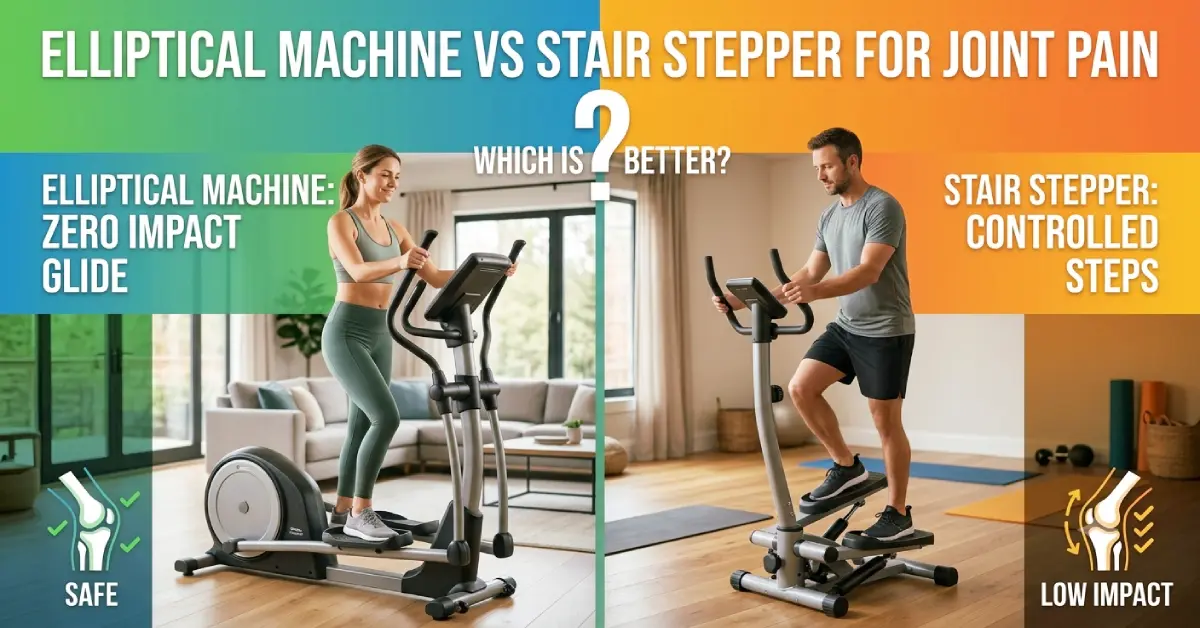
Finding the right fitness equipment for home exercise can feel challenging when you live with joint discomfort. If you suffer from knee stiffness, hip pain, or lower back soreness, choosing between an elliptical machine vs stair stepper for joint pain becomes an essential decision for your daily wellness. Both machines provide low-impact cardio, but they work your joints in very different ways.
Deciding between an elliptical machine and a stair stepper can be a game-changer for your joint health and fitness routine. In this comprehensive guide, we break down their distinct motion mechanics, impact intensities, and safety features, empowering you to choose the ideal low-impact equipment to achieve your wellness goals while protecting your knees.
Quick Comparison: Elliptical vs Stair Stepper at a Glance
To help you compare these two popular exercise machines quickly, we have summarized their core features in the table below:
| Feature | Elliptical Machine | Stair Stepper Machine |
| Primary Motion | Smooth, oval gliding movement | Vertical stepping or climbing motion |
| Impact Level | Near-zero impact on knees and hips | Very low impact with proper form |
| Upper Body Involvement | Yes (push-pull handlebars) | Optional (mostly lower body focus) |
| Joint Stress Areas | Minimal stress on ankles and knees | Moderate pressure on knee flexion |
| Foot Movement | Feet stay flat on moving pedals | Feet lift and press repeatedly |
| Best For | Full-body exercise with maximum joint relief | Target lower-body toning in small spaces |
Understanding Joint Pain and Low-Impact Exercise
Joint pain often occurs when sensitive cartilage wears down or surrounding tissues become inflamed. Therefore, high-impact activities like running on hard pavement can send sharp shockwaves through your ankles, knees, and hips. Consequently, fitness experts strongly recommend low-impact cardio machines for sustainable exercise.
Low-impact machines allow you to elevate your heart rate and burn calories while keeping joint stress to a minimum. Furthermore, staying physically active helps lubricate your joints and strengthen surrounding muscles. However, you must choose equipment that matches your specific joint sensitivities.
Elliptical Machine for Joint Relief: Pros and Cons
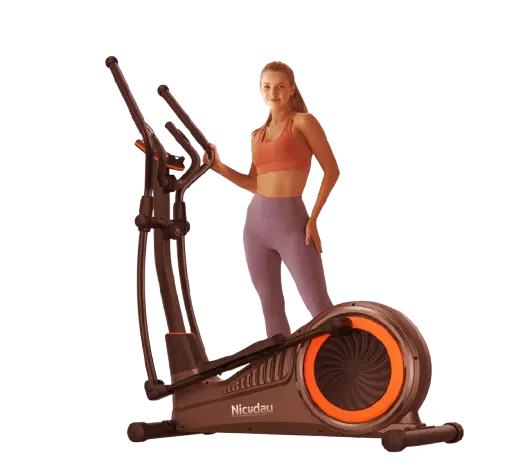
The elliptical machine is widely regarded as one of the gentlest cardio options available today. It uses a suspended pedal system that mimics natural walking or running without foot impact.
Why the Elliptical Is Gentle on Knees and Hips
Because your feet never leave the foot pedals, the elliptical eliminates ground impact entirely. As a result, your knees, ankles, and hips experience smooth, continuous motion. Additionally, the moving handlebars allow your arms and upper back to share the workload. This upper-body engagement reduces the stress placed solely on your lower joints. If you need a compact option for working or relaxing at home, read our review of the Best Under Desk Elliptical for Diabetics: Top 5 Picks for 2026 to keep your joints moving safely while seated.
Potential Drawbacks for Joint Pain
However, ellipticals require a wider standing stance than natural walking. For individuals with severe hip arthritis or groin discomfort, this wider stance can sometimes cause mild irritation. Furthermore, elliptical machines have a large footprint, making them harder to store in smaller living areas.
Stair Stepper for Joint Relief: Pros and Cons
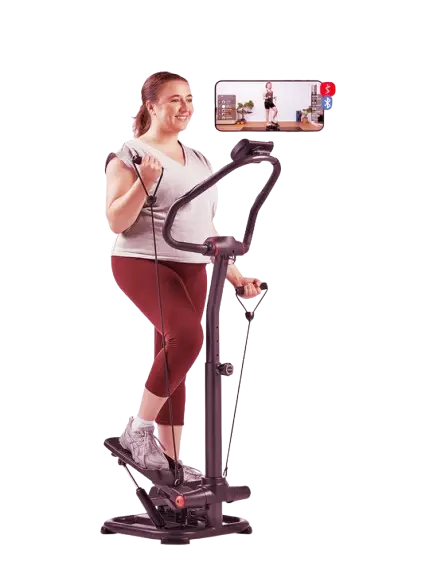
A stair stepper machine focuses on vertical motion, replicating the action of climbing stairs in a controlled, adjustable environment.
How Steppers Support Lower-Body Strength
Steppers are exceptional for strengthening the quadriceps, hamstrings, glutes, and calves. Consequently, building these key muscle groups provides better structural support for your knee joints over time. Many compact models also include resistance bands, allowing you to tone your upper body simultaneously.
Important Safety Considerations for Sensitive Joints
While stepping is far safer than climbing real concrete stairs, it still involves deeper knee bending (flexion). Therefore, if you currently experience acute knee inflammation or cartilage loss, repetitive stepping may create uncomfortable pressure. To learn more about selecting stable stepping equipment for your routine, read our detailed guide on the 5 Best Stair Stepper Machines for Home Exercise.
Key Differences: Elliptical Machine vs Stair Stepper for Joint Pain: Which Is Better?
When evaluating an elliptical machine vs stair stepper for joint pain, several practical factors can guide your decision:
Impact Level on Knees and Hips
The elliptical offers near-zero impact because your feet remain suspended on smooth gliding pedals. In contrast, a stepper requires pushing down against hydraulic resistance. While still considered low impact, stepping creates slightly more pressure on the knee joint than elliptical gliding.
Calorie Burn vs Joint Comfort
Both machines deliver efficient cardiovascular conditioning. However, even with low-impact cardio like an elliptical, muscle fatigue or minor soreness can still occur after a longer session. To properly soothe your muscles and speed up recovery without aggravating sensitive areas, explore our detailed comparison in RENPHO Active Thermacool 2 vs. TOLOCO Massage Gun: Which Is Best for Pain & Recovery?.
Space, Storage, and Home Gym Suitability
If space is your primary concern, mini steppers are remarkably compact and easy to slide under a bed. Conversely, elliptical machines require dedicated floor space. Consequently, homeowners with tight living quarters often prefer stepping units for daily convenience. To better understand how low-impact physical activity protects vulnerable joints and reduces chronic stiffness, read the comprehensive guidelines on Exercise for Joint Pain Relief by Mayo Clinic.
The Final Verdict: Which Machine Should You Choose?
Selecting between these two machines ultimately depends on your body’s specific comfort needs and your home space:
- Choose the Elliptical Machine if: You have active knee pain, hip stiffness, or back discomfort and want the smoothest, zero-impact full-body workout possible.
- Choose the Stair Stepper Machine if: You want to build leg strength, have mild joint sensitivity, and require a compact unit that fits easily into small apartments.
In addition, maintaining proper post-workout leg elevation and muscle recovery is essential for chronic pain management—feel free to check out our review of the 5 Best Recliner Chairs for Diabetics to Improve Leg Circulation in 2026 for relaxing recovery options.
Frequently Asked Questions (FAQs)
Ans.Yes. An elliptical machine is generally better for bad knees because your feet stay planted on moving pedals, eliminating repetitive knee compression. Steppers require constant knee bending, which may aggravate sensitive knee joints. For detailed guidance on choosing joint-friendly workouts, explore the Harvard Health Guide on Low-Impact Exercises for Sensitive Knees.
Ans. Using a stair stepper with proper form and moderate resistance will not damage healthy knees. However, if you already have severe knee arthritis or tendonitis, excessive stepping can cause irritation due to repetitive knee flexion.
Ans. Most health guidelines recommend 150 minutes of moderate low-impact cardio per week. Therefore, using your machine for 20 to 30 minutes, 5 days a week, helps keep your joints mobile without overworking them.
Ans. Following a low-impact cardio session on an elliptical or stair stepper, gentle muscle recovery is essential—especially for seniors or individuals managing sensitive neuropathy. Incorporating advanced thermal recovery tools, such as the RENPHO Active Thermacool 2 or a versatile massage gun, can help soothe inflammation, relax tight muscle knots, and safely stimulate healthy blood circulation without aggressive vibration.