
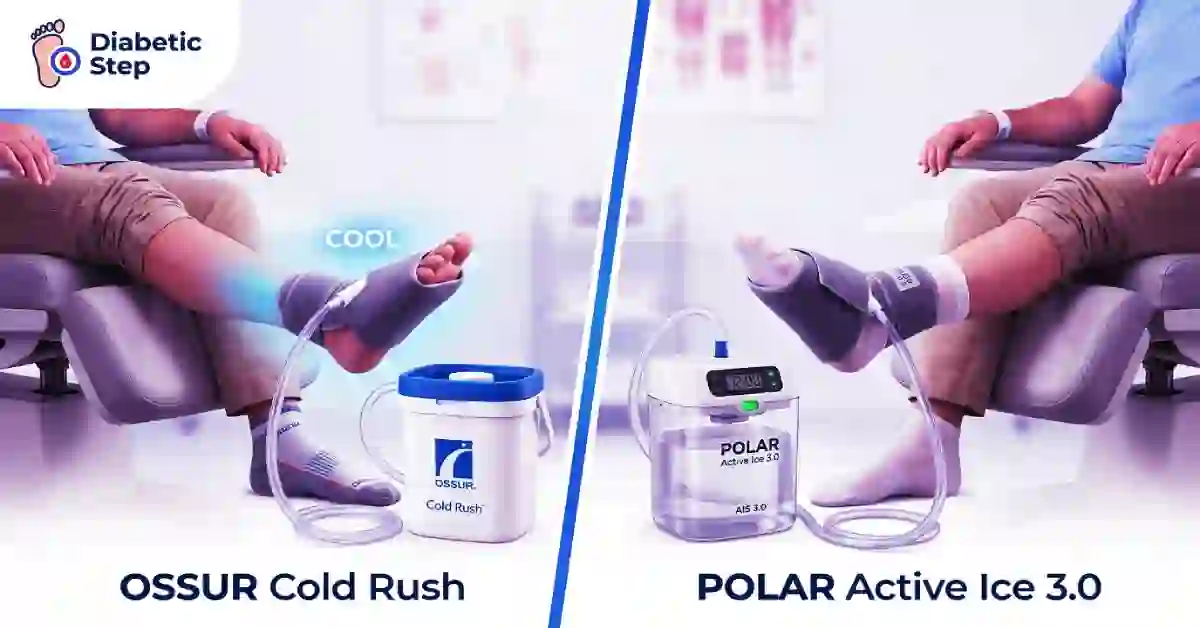
When comparing Ossur Cold Rush vs. Polar Active Ice 3.0, determining which system is safer for diabetic neuropathy comes down to temperature regulation, ease of operation, and built-in safety controls like automatic shutoff timers.
For individuals living with diabetic peripheral neuropathy (DPN), managing swelling, joint aches, or post-exercise foot inflammation requires extra caution. Because nerve damage reduces temperature sensitivity (Loss of Protective Sensation), using traditional ice packs or unregulated cooling therapy can easily lead to silent frostbite or microvascular damage. Motorized continuous cold therapy units offer a controlled, safer alternative by circulating chilled water through insulated pads at steady, safe temperatures.
Two of the most trusted motorized cooling devices on the market today are the Ossur Cold Rush Therapy System and the Polar Active Ice 3.0. In this head-to-head comparison, we will evaluate their safety features, motor noise, pad comfort, timer capabilities, and overall value to help you make an informed choice for your daily foot care routine.
Ossur Cold Rush vs Polar Active Ice 3.0: Quick Comparison
Before diving into detailed feature breakdowns, the summary table below highlights the core specifications and safety metrics of both continuous cooling systems:
| Feature / Metric | Ossur Cold Rush | Polar Active Ice 3.0 |
| Primary Safety Highlight | Whisper-quiet brushless motor & flow stability | Programmable digital timer with auto-shutoff |
| Timer Capability | No built-in timer (Requires external alarm) | Built-in digital timer (10 to 60 minutes) |
| Motor Noise Level | Exceptionally quiet (~30 dB) | Moderate operational hum (~45 dB) |
| Water Reservoir Capacity | Compact (4.2 Quarts / ~4 Liters) | Large capacity options (9 to 15 Quarts) |
| Targeted Pad Ergonomics | Flexible, semi-rigid foot/ankle ergonomic pads | Soft, customizable compression wraps |
| Temperature Control | Continuous flow rate (Requires steady ice ratio) | Steady circulation with programmable cycles |
| Diabetic Safety Rating | Good (Requires active manual monitoring) | Excellent (Auto-shutoff protects numb skin) |
The Critical Safety Factor: Why Cold Therapy Choice Matters for Numb Feet
When selecting a continuous cooling unit for diabetic foot care, safety is the primary consideration. Standard ice bags deliver uncontrolled sub-freezing temperatures (below 32°F / 0°C) that spike initially and fade quickly. In contrast, motorized continuous cold therapy units maintain water circulation within a consistent, therapeutic temperature range of 45°F to 55°F (7°C to 12°C).
However, even within a safe temperature range, extended cold exposure on neuropathic skin can cause localized micro-ischemia or tissue breakdown. This is why safety mechanisms—specifically automatic timers and protective barrier sleeves—are vital when treating diabetic feet. To learn more about the physiological risks of freezing temperatures on nerve-damaged tissue, read our detailed guide on Is Ice Safe for Diabetic Neuropathy? Cold Therapy Safety Guide.
Deep Dive: Ossur Cold Rush Therapy System
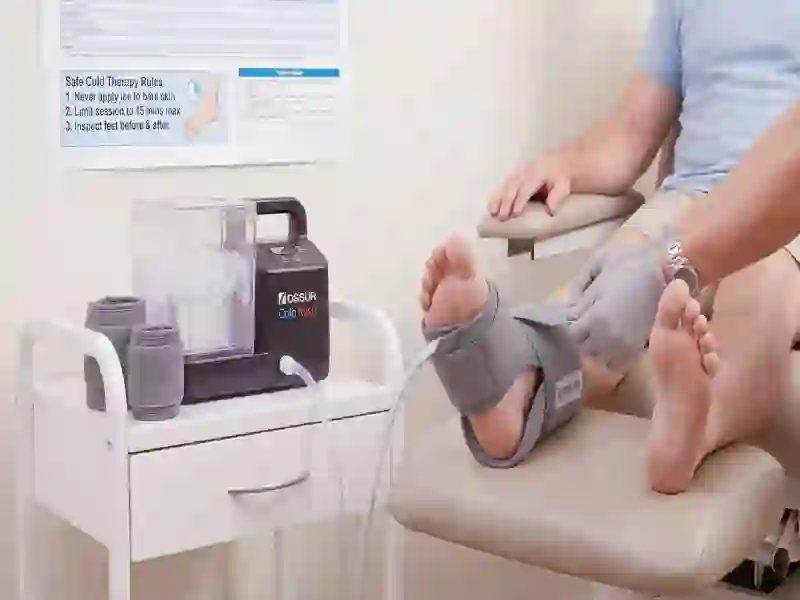
The Ossur Cold Rush is widely recognized in orthopedic clinic settings for its durability, whisper-quiet motor operation, and consistent water flow delivery.
Key Features & Design
The Ossur Cold Rush utilizes a unique brushless motor setup that reduces mechanical friction and operating sound. It features a compact, insulated ice chest and uses custom ergonomic pads equipped with double-seal tubing to prevent fluid leaks.
Pros:
- Whisper-Quiet Operation: Operates at near-silent noise levels, making it ideal for nighttime use or reading.
- Ergonomic Foot & Ankle Pads: The specialized foot pad wraps snugly around lower limbs without slipping.
- High Ice-to-Water Efficiency: Well-insulated bucket keeps ice frozen for up to 6 hours of continuous cooling.
Cons:
- No Built-in Timer: Lacks an integrated auto-shutoff feature, meaning users must manually turn off the machine or use an external outlet timer.
- Smaller Reservoir Capacity: Requires more frequent ice refills compared to larger cooling buckets.
For an in-depth breakdown of features and setup instructions for this system, see our full Cold Rush Therapy System Review: Top 3 Picks for Diabetic Pain & Swelling Relief.
Deep Dive: Polar Active Ice 3.0 Cold Therapy System
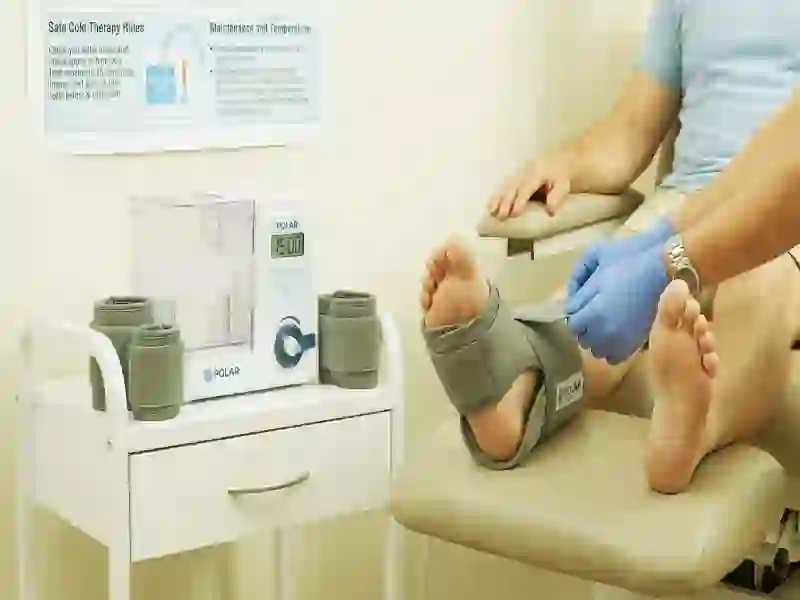
The Polar Active Ice 3.0 is specifically designed with home recovery and user safety in mind, offering customizable timing cycles and high-volume ice capacity.
Key Features & Design
The standout feature of the Polar Active Ice 3.0 is its digital programmable timer. Users can set session durations in 10-minute increments or configure custom cycle intervals (e.g., 15 minutes on, 30 minutes off). It also features a larger 9-quart or 15-quart cooling chest, reducing the frequency of ice refills.
Pros:
- Programmable Digital Timer: Automatically turns off the motor after pre-set time limits, preventing accidental over-exposure.
- Large Water Reservoir: Holds significantly more ice and water, sustaining consistent cooling through long recovery cycles.
- Versatile Wrap Attachments: Soft compression wraps accommodate ankles, feet, knees, or calves comfortably.
Cons:
- Slightly Louder Pump: The motor generates a noticeable operational hum compared to the ultra-quiet Ossur unit.
- Larger Footprint: The spacious reservoir requires more floor space and storage area.
Ossur Cold Rush vs Polar Active Ice 3.0: Head-to-Head Comparison
1. Safety & Auto-Shutoff Timers (Winner: Polar Active Ice 3.0)
For users with diabetic peripheral neuropathy, Polar Active Ice 3.0 holds a clear advantage due to its integrated digital timer. Patients with reduced foot sensitivity face the risk of falling asleep during a cooling session or losing track of time. Polar’s automatic shutoff ensures that cold application stops strictly at 15 or 20 minutes, safeguarding numb skin from cold-induced injuries.
Note: If you choose the Ossur Cold Rush, you must pair it with a smart wall plug timer or set a separate alarm.
2. Motor Noise & Daily Usability (Winner: Ossur Cold Rush)
If noise sensitivity or quiet resting is your top priority, Ossur Cold Rush excels. Its brushless pump mechanism operates quietly without disturbing household members or TV listening.
3. Pad Ergonomics & Compression (Tie)
Both systems offer high-quality, leak-resistant pads. Ossur’s semi-rigid foot pad offers structured heel-to-toe support, while Polar’s soft elastic compression straps provide adjustable, gentle pressure across swollen ankles.
How to Safe-Proof Either System for Neuropathy Recovery
Regardless of which continuous cooling machine you select, adhering to strict safety protocols is essential when applying cold therapy to lower limbs:
- Always Insert a Protective Barrier: Never place cooling pads directly onto bare skin. Slip on a clean, dry cloth sleeve or cotton sock prior to pad application.
- Limit Sessions to 15 Minutes: Restrict cooling sessions to a maximum of 15 minutes per cycle to maintain healthy blood circulation.
- Inspect Feet Before & After: Examine feet under bright light for red spots, cuts, or skin discoloration before and immediately after every session.
To maintain an active recovery routine without risking foot complications, explore our guide on How to Manage Diabetes Foot Care While Exercise Testing.
Frequently Asked Questions (FAQ)
Ans. The Polar Active Ice 3.0 is generally safer for seniors with neuropathy because of its built-in digital programmable timer. The auto-shutoff mechanism prevents prolonged cooling sessions if a user falls asleep or forgets to monitor the time.
Ans. Yes. Since the Ossur Cold Rush does not include a built-in timer, connecting its power cord to a digital wall timer or smart plug allows you to set automatic 15-minute shutoff cycles for added safety.
Ans. Refill frequency depends on reservoir size and room temperature. The Ossur Cold Rush typically holds cold water for 4 to 6 hours, while the larger Polar Active Ice 3.0 reservoir can maintain operating temperatures for up to 8 to 10 hours before fresh ice is needed.
The Final Verdict: Which One Should You Buy?
Both the Ossur Cold Rush and Polar Active Ice 3.0 offer therapeutic cooling superior to standard ice packs. However, when evaluating safety specifically for diabetic neuropathy:
- Choose the Polar Active Ice 3.0 if: You want built-in safety automation, programmable auto-shutoff timers, and a larger ice capacity that requires fewer refills during recovery.
- Choose the Ossur Cold Rush if: You prioritize ultra-quiet motor performance and compact portability, and are willing to use an external plug timer for time management.
For diabetic foot care, Polar Active Ice 3.0 takes the top recommendation for safety due to its protective timer mechanism.