

Finding the best ways to prevent diabetic kidney disease is a top priority for anyone managing diabetes at home. Over time, chronic high blood sugar levels can silently damage the delicate filtering systems in your kidneys, leading to a condition known medically as diabetic nephropathy. The good news is that with proactive daily choices, targeted nutrition, and consistent health monitoring, you can significantly reduce your risk, stop renal decline, and protect your long-term wellness.
This comprehensive home care guide delivers actionable, science-backed strategies to safeguard your kidneys while effectively managing your diabetes.
How Does Diabetes Cause Kidney Damage?
To protect your organs, it is vital to understand the underlying biological relationship between blood glucose and renal function. Your kidneys contain millions of tiny blood vessel clusters called glomeruli, which act as microscopic filters. These filters strain waste products from your blood while keeping essential compounds, like proteins and red blood cells, inside your body.
When you live with diabetes, chronic hyperglycemia (high blood sugar) forces these filtration units to work under immense stress. Over the years, high glucose concentrations cause chemical changes that stiffen and narrow the blood vessels. This restricts healthy blood flow and causes structural damage to the glomeruli. In much the same way that poor circulation triggers severe nerve damage in the limbs, finding the Best Cold Laser Therapy Devices for Diabetic Neuropathy: 5 Top Picks for Home Relief becomes essential if you are also managing chronic numbness or foot pain alongside these internal microvascular changes.
In addition, As the damage progresses, the kidneys lose their efficiency. Instead of filtering out waste, they begin to leak useful proteins into your urine, which is often the very first medical indicator of diabetic kidney complications.
Silent Symptoms of Diabetic Kidney Disease

One of the most dangerous aspects of renal complications in diabetics is that it behaves like a “silent” condition. In its earliest phases (Stages 1 through 3), there are typically zero physical symptoms. A person could lose up to 50% of their kidney function without feeling a single stitch of pain or discomfort.
As the condition advances to later stages, however, noticeable physical changes begin to manifest across the body:
- Fluid Retention (Edema): Swelling in your ankles, feet, lower legs, or puffiness around your eyes, caused by water retention.
- Persistent Fatigue: Feeling constantly exhausted or weak, which happens as toxic waste builds up in the bloodstream.
- Changes in Urination: An increased need to urinate, especially at night, or urine that appears unusually foamy or bubbly (a sign of leaking protein).
- Uncontrolled Blood Pressure: Sudden spikes in blood pressure that become increasingly difficult to regulate with standard medications.
When to See a Doctor for Kidney Screening
Because early stages lack clear warning signs, routine clinical screenings are mandatory. If you have Type 2 diabetes, you should receive a kidney function assessment immediately upon diagnosis and every single year thereafter. For Type 1 diabetes, annual screenings should begin five years after your initial diagnosis.
Best Ways to Prevent Diabetic Kidney Disease at Home
Implementing the best ways to prevent diabetic kidney disease at home gives you full control over your daily health path. By adopting structured habits, you can stop renal decline before it starts. Since regular, low-impact cardio is crucial for maintaining healthy blood pressure and filtering efficiency, starting a safe workout routine with the Top 5 Best Recumbent Bike Models Under $500: High-Quality Exercise at Home can be an excellent first step. Here are the five foundational pillars of home-based preventative care.
1. Maintain Strict Blood Sugar Control
The single most effective shield for your kidneys is keeping your blood glucose levels within your target range. Chronic spikes in sugar are the root cause of vessel degradation.
- Action Plan: Check your blood sugar levels multiple times a day using a continuous glucose monitor (CGM) or a standard finger-prick glucometer. Aim to keep your fasting blood sugar under 100 mg/dL and your post-meal sugar under 140 mg/dL, or as specifically advised by your doctor.
- The HbA1c Target: Work closely with your medical team to maintain an HbA1c level below 7%. Keeping your A1c consistently stable directly minimizes the oxidative stress placed on your glomeruli.
2. Manage Your Blood Pressure Levels
High blood pressure (hypertension) is the second leading cause of kidney failure. When combined with diabetes, hypertension accelerates kidney damage exponentially. High pressure strains the renal arteries, causing them to scar and weaken.
- Action Plan: Invest in an accurate, digital upper-arm blood pressure monitor for home use. Check your readings at the same time every day—ideally once in the morning and once in the evening.
- The Golden Target: For most adult diabetics, the ideal blood pressure target is below 130/80 mmHg. If your numbers are consistently higher, speak with your doctor about kidney-protective blood pressure medications, such as ACE inhibitors or ARBs.
3. Adopt a Kidney-Friendly Diabetic Diet
Your kitchen is your first line of defense. A proper diet for managing diabetic renal health requires a careful balance between regulating carbohydrates and reducing metabolic strain on your kidneys.
| Foods to Emphasize | Foods to Avoid / Minimize |
| Fresh, low-potassium vegetables (berries, apples, bell peppers) | Canned soups and frozen meals (packed with excess sodium) |
| Lean protein portions (skinless poultry, fresh fish) | Processed meats (sausages, deli meats, bacon) |
| Whole grains in moderation (quinoa, brown rice, oats) | Refined carbohydrates (white bread, sugary pastries) |
- Slash Sodium Intake: Excess salt forces your body to retain fluids, raising blood pressure and overloading renal filters. Limit your daily sodium intake to less than 2,300 mg (about one teaspoon of salt), and avoid adding table salt to cooked meals.
- Moderate Your Protein: While protein is essential, consuming excessive amounts forces your kidneys to work much harder to filter out urea (a byproduct of protein metabolism). Stick to high-quality, lean proteins and avoid heavy, oversized portions of red meat.
4. Stay Hydrated, But Avoid Sugary Drinks
In addition, Proper hydration helps your kidneys clear sodium, urea, and toxins from your blood more efficiently. However, the type of fluids you drink matters immensely.
- Action Plan: Make clean, filtered water your primary beverage. Drink enough water so that your urine remains a pale, clear yellow color throughout the day.
- Eliminate Liquid Sugars: Completely eliminate soda, sweetened fruit juices, energy drinks, and sweetened iced teas. These drinks cause massive, immediate blood sugar spikes and overload your liver and kidneys with processed fructose and chemical additives.
5. Keep Moving with Low-Impact Exercises
Regular physical activity improves insulin sensitivity, making it much easier for your body to manage blood sugar naturally. Exercise also helps lower resting blood pressure and aids in weight management. If you are looking for gentle, risk-free ways to stay active without leaving the house, incorporating these 5 Simple Indoor Exercises for Seniors with Diabetes (Safe & Easy) into your daily routine is a fantastic way to protect your kidneys and overall health.
- Action Plan: Commit to at least 150 minutes of moderate-intensity exercise per week. This can easily be broken down into 30-minute sessions, five days a week.
- Safe Choices: Opt for gentle, highly effective low-impact exercises such as brisk walking, swimming, cycling, or stationary rowing. Avoid extreme, exhausting workouts if you already suffer from severe complications, and always check your blood sugar levels before starting your workout routine.
Essential Lab Tests for Diabetic Kidney Care
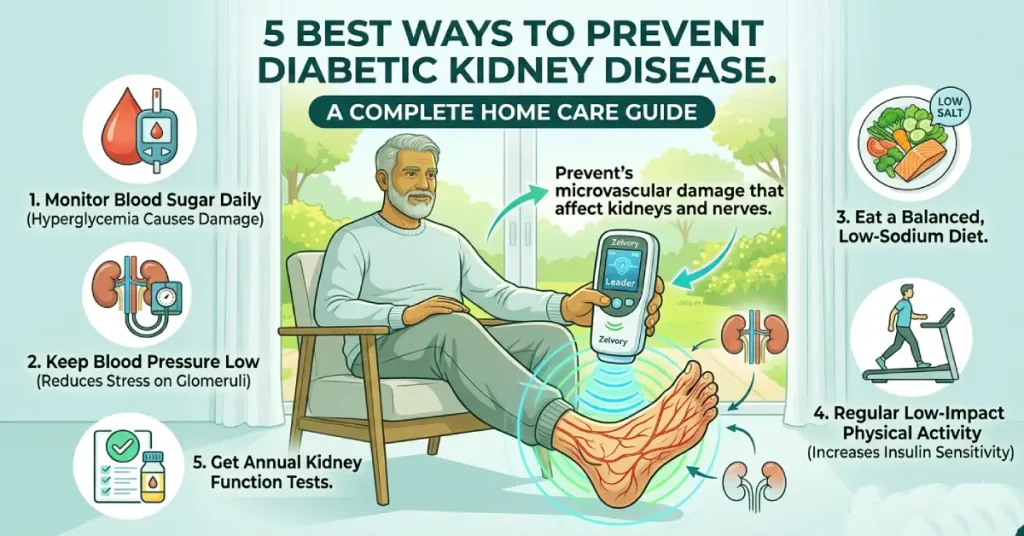
While home management forms the foundation of prevention, clinical testing confirms whether your efforts are succeeding. There are two vital laboratory tests that every diabetic must track diligently:
- Urine Albumin-to-Creatinine Ratio (UACR): This simple urine test checks for microscopic amounts of a protein called albumin. If your UACR score is below 30 mg/g, your kidneys are filtering protein correctly. A score above 30 mg/g indicates early-stage leakage, signaling that your treatment plan needs immediate adjustment.
- Estimated Glomerular Filtration Rate (eGFR): This blood test measures how efficiently your kidneys clear waste. An eGFR score of 90 or above represents healthy, normal kidney function. A score that drops consistently below 60 indicates early to moderate kidney disease, requiring direct intervention by a nephrologist.
Daily Checklist vs. Monthly Monitoring for Kidney Health
Consistency is key to protecting your organs. Organizing your health routine into a structured timetable prevents mistakes and ensures long-term safety.
| Frequency | Essential Tasks for Renal Protection | Target Reference Ranges |
| Daily Tasks | • Check blood sugar levels pre/post meals. • Measure blood pressure at home. • Limit sodium intake below 2,300 mg. • Drink 8-10 glasses of filtered water. | • Glucose: 70-130 mg/dL (fasting) • Blood Pressure: under 130/80 mmHg • Salt: less than 1 tsp total daily |
| Monthly Tasks | • Review prescription medication refills. • Track average home blood pressure logs. • Inspect feet and legs for swelling/edema. | • Consistent, stable health trends • Zero sudden weight or fluid gains |
| Annual Tasks | • Schedule comprehensive laboratory work. • Complete a formal medical review. • Undergo full eye and nerve examinations. | • HbA1c: under 7.0% • UACR: under 30 mg/g • eGFR: over 90 mL/min/1.73m² |
Frequently Asked Questions About Diabetic Kidney Disease
Ans. Yes, early-stage kidney damage (indicated by mild protein leakage in the urine with a stable eGFR) can often be halted or completely reversed. By achieving strict, optimal control over your blood sugar, keeping your blood pressure under 130/80 mmHg, and utilizing kidney-protective medications like ACE inhibitors, you can give your renal tissues the ideal environment to heal and recover.
Ans. Pure, plain water remains the absolute safest and most effective beverage for renal health. If you find plain water boring, you can safely infuse it with fresh slices of lemon, cucumber, or mint leaves. Unsweetened herbal teas, such as chamomile or green tea, are also completely acceptable choices that do not raise blood glucose or strain renal filtration systems.
Ans. No, metformin does not cause kidney damage. This is a very common medical misconception. Metformin is filtered out of the body through the kidneys, so if your kidney function drops significantly due to other factors, the drug can accumulate safely in your bloodstream. For this reason, doctors will lower the dose or stop metformin if your eGFR drops below 30, but the medication itself is completely safe for healthy kidneys.
Ans. If you have diabetes but your kidney function tests (UACR and eGFR) are completely normal, a moderate protein diet is perfectly safe. However, if your laboratory results already show signs of early kidney decline, a high-protein diet (especially one heavy in processed red meat) should be strictly avoided. Excess protein creates high amounts of nitrogenous waste, forcing your kidneys to work overtime and accelerating tissue wear.
Final Thoughts on Managing Best Ways to Prevent Diabetic Kidney Disease
Taking charge of your metabolic wellness through the best ways to prevent diabetic kidney disease is a life-changing step. Renal protection does not require complicated clinical setups; rather, it thrives on small, disciplined choices made inside your home every day.
By closely monitoring your daily blood sugar, keeping your blood pressure within a safe window, eating a balanced, low-sodium diet, and ensuring you get routine annual blood and urine tests, you create an unbeatable defense for your body. Stay proactive, stay consistent, and remember that protecting your kidneys ensures a vibrant, energetic, and healthy future. For deeper medical insights and personalized tracking tools, you can explore the official resource center on managing health via the National Kidney Foundation or check out the CDC’s Guide on Preventing Kidney Disease.