
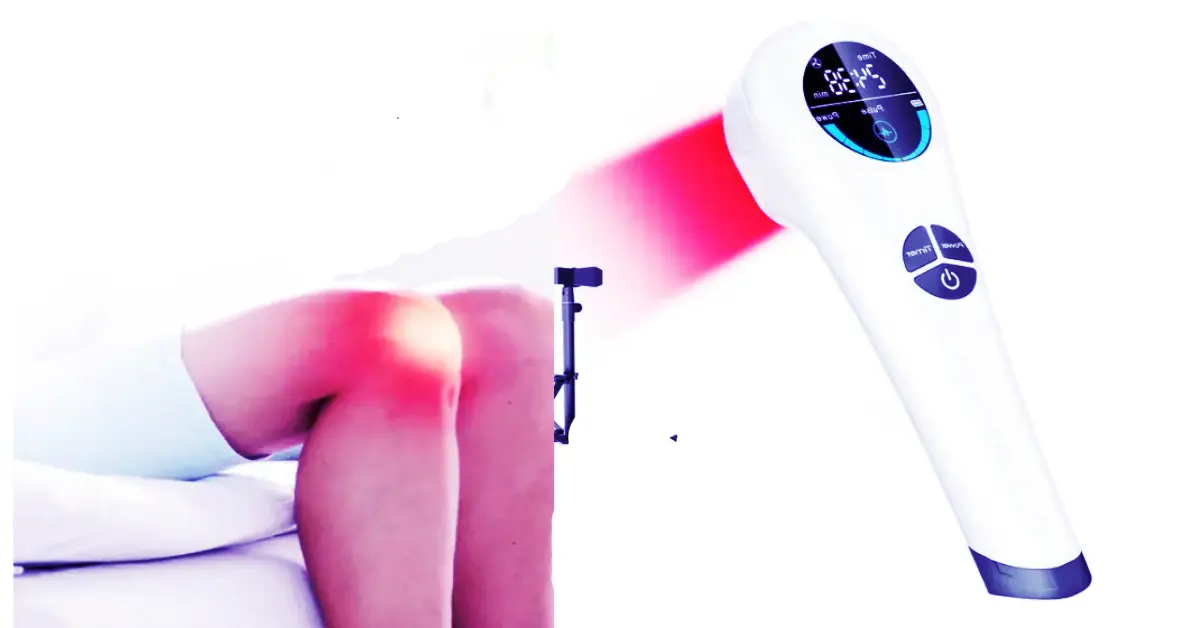
Finding the best cold laser therapy devices for diabetic neuropathy is a critical milestone for anyone seeking non-invasive, drug-free pain relief from chronic nerve discomfort. Millions of individuals globally battle the debilitating numbness, burning sensations, and sharp pains associated with metabolic nerve damage. While pharmaceutical interventions often come with unwanted systemic side effects, low-level laser therapy (LLLT) targets cellular recovery directly at the source. By utilizing specific light wavelengths, these advanced home-use medical devices stimulate cellular repair and drastically improve microcirculation in the lower extremities.
The Science of Best Cold Laser Therapy Devices for Diabetic Neuropathy
Low-Level Laser Therapy (LLLT) operates on the principle of photobiomodulation. When the light pads are applied to the skin, coherent light photons penetrate deep into the underlying tissues. They specifically target the mitochondria within damaged nerve cells. Moreover, this advanced cellular stimulation offers a highly targeted approach to expanding blood vessels. This makes it a sophisticated alternative for those who find mechanical circulation gear or heavy foot rollers too aggressive for their sensitive feet. If you are exploring various home relief options, it is critical to understand the safety profiles of standard circulatory tools. For instance, you can choose between a Manual vs Electric Foot Massager for Diabetics to see which option is safer for nerve-damaged tissues. However, while massagers work on external muscle stimulation, LLLT focus entirely on deep sub-cellular nerve fiber repair.
This cellular interaction triggers three profound physiological transformations:
- ATP Production Boost: The light stimulates cytochrome c oxidase, accelerating adenosine triphosphate ($ATP$) synthesis to provide the raw energy required for nerve fiber regeneration.
- Nitric Oxide Release: It prompts the release of local nitric oxide, expanding blood vessels and delivering fresh oxygen to ischemic tissues.
- Reduction in Oxidative Stress: It downregulates inflammatory cytokines, bringing immediate soothing relief to hypersensitive pain receptors.
Important Medical Disclaimer: The information provided in this guide is for informational purposes only and does not substitute for professional medical advice. Always consult your podiatrist or primary care physician before introducing new phototherapy equipment to your diabetic foot care routine.
Buying Guide: How to Select the Best Cold Laser Therapy Devices for Diabetic Neuropathy
Choosing a premium therapeutic device requires careful evaluation of clinical specifications. Because diabetic skin can be desensitized to sensory cues, home-use safety features are just as crucial as the underlying laser technology. Choosing one of the best cold laser therapy devices for diabetic neuropathy requires careful consideration of wavelength options.”
Wavelength Profiles ($nm$)
Clinical efficiency relies entirely on the depth of penetration. Devices combining $650nm$ red light with near-infrared (NIR) wavelengths ranging from $808nm$ to $980nm$ are universally recognized as the gold standard for neuropathic conditions. The $650nm$ wave is absorbed by superficial skin layers to heal micro-wounds. Moreover, the invisible near-infrared waves cut through dense muscle and deep bone structures to reach deeply buried peripheral nerve endings.
Laser Power and Pulsed Output
Continuous wave lasers provide a steady stream of light energy, which is ideal for broad tissue therapy. However, pulsed laser modes can deliver higher peak power spikes without generating surface thermal heat. This protective mechanism ensures that desensitized diabetic tissue remains entirely protected from accidental overheating or minor skin irritation. Moreover, while pulsed lasers work actively on cellular repair at night, physical therapist-approved tools like the Best Diabetic Leg Elevation Pillows to Boost Circulation can be used passively throughout the day or during sleep to prevent fluid accumulation and naturally drain pooled blood from the lower limbs. Therefore, combining both active light therapy and passive elevation offers the ultimate holistic approach to complete metabolic nerve and vascular recovery.
Comparison Table: Premium Home-Use LLLT Equipment
| Brand Name | Laser Wavelengths | Operational Mode | Targeted Clinical Benefit | Price Tier on Amazon |
| LLLT Handheld | $808nm$ (5) & $650nm$ (10) | Continuous / Focused | High-Intensity Deep Muscle Repair | High-Ticket ($150 – $180) |
| DGXINJUN Wrap | $880nm$ & Red Light LEDs | Hands-Free Wearable | 100% Passive Joint & Foot Recovery | High-Ticket ($120 – $150) |
| KTS Clinical | $808nm$ (2) & $650nm$ (12) | Smart LED Touch Mode | Seniors’ Precision Nerve Targeting | Premium ($160 – $200) |
| Zelvory Wand | $808nm$ (4) & $650nm$ (14) | Balanced Dual Mode | Dual-Action Nerve & Joint Relief | High-Ticket ($130 – $160) |
| SINORIKO Device | $808nm$ (3) & $650nm$ (13) | 4 Power & Timer Tiers | Budget-Conscious Daily Maintenance | Affordable (~$120) |
Detailed Product Reviews: Best Cold Laser Therapy Devices for Diabetic Neuropathy
1. LLLT Handheld Infrared Light Therapy Device (with Protective Magnetic Cover)
Best for High-Intensity Deep Tissue Targeting (5x808nm + 10x650nm)
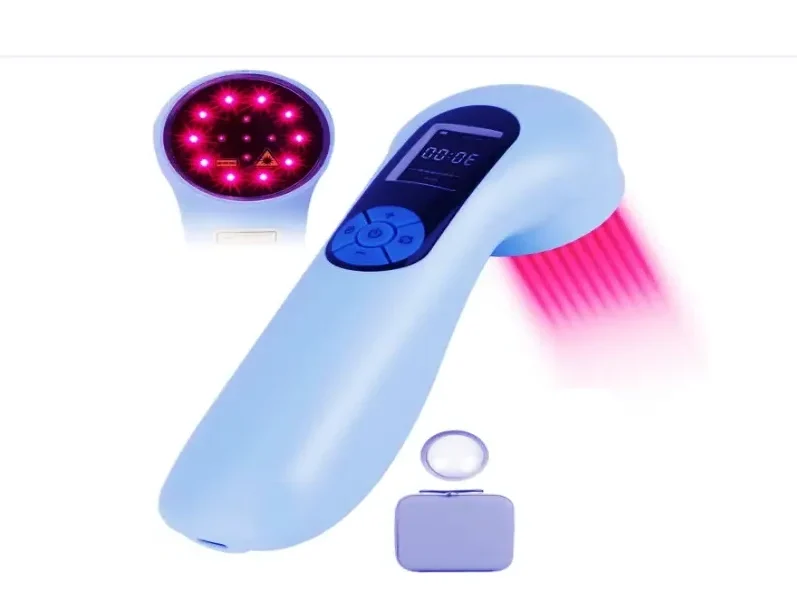
This versatile, clinical-grade handheld device is a top-seller on Amazon, recognized for its unique protective magnetic cover and powerful diode configuration. Packing five deep-penetrating $808nm$ near-infrared lasers and ten $650nm$ red light diodes, it delivers a massive energy payload directly to damaged neural networks.
- The Clinical Edge: Featuring five heavy-duty $808nm$ laser beams, this device offers superior depth of penetration compared to standard consumer models. Moreover, because it is fully cross-compatible for human recovery and veterinary use, it stands out as an incredibly high-value family investment. It cuts through deep muscle layers to instantly lower oxidative stress around desensitized nerve roots.
- Home-Use Safety Features: The innovative magnetic protective cover shields the delicate laser lenses from dust and scratches when not in use. ecause of its industrial-strength emission density, wearing the included protective safety goggles is non-negotiable during treatment cycles.
- Pros: Powerful 5x808nm laser configuration for deeper tissue saturation; rugged build quality; highly portable for home use.
- Cons: The higher density of infrared output means sessions must be strictly capped at 15 minutes to ensure maximum skin safety.
2. DGXINJUN Infrared & Red Light Therapy Knee & Joint Wrap
Best FDA-Cleared Hands-Free Wrap for Joint Pain Relief (880nm & Red Light)
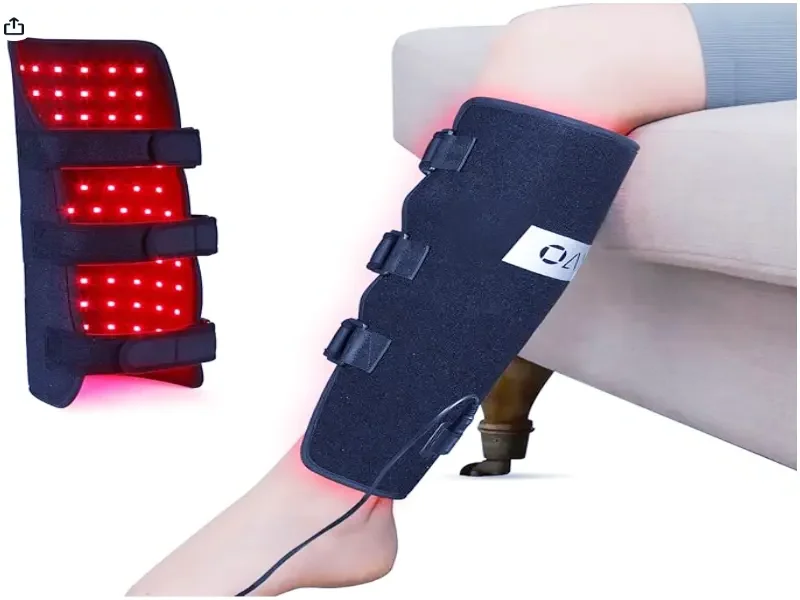
If your neuropathic symptoms trigger severe discomfort around your knees, elbows, or ankles during or after a workout, this FDA-cleared wearable wrap from DGXINJUN is the absolute benchmark for comfort and passive recovery. Moreover, using a device with rigorous regulatory vetting gives diabetic patients immense peace of mind regarding operational safety thresholds. However, you should check the official FDA Medical Device Consumer Guidelines if you want to understand the exact clinical standards. These guidelines detail how home healthcare clearance protects consumers. It guards against improper thermal emissions and electrical irregularities.
- The Clinical Edge: Unlike rigid handheld wands, this system utilizes a flexible, medical-grade neoprene wrap lined with powerful $880nm$ near-infrared and red light LEDs. It wraps entirely around the joint capsule, distributing deep-penetrating light energy evenly across the peripheral circulatory paths without causing any localized muscle fatigue.
- Home-Use Safety Features: This system is officially FDA-cleared, proving its structural compliance with rigorous home healthcare safety standards. However, patients with advanced peripheral neuropathy must use the lowest heat settings initially, as their desensitized skin cannot easily detect minor thermal changes.
- Pros: 100% hands-free operational mechanics; broad coverage for large joints; flexible Velcro straps fit any body type comfortably.
- Cons: Requires a steady connection to a wall power outlet, which limits your physical mobility during a therapy session.
3. KTS Handheld Infrared Cold Laser Device (with LED Display)
Best User-Friendly Device for Precision Muscle Recovery (2x808nm + 12x650nm)
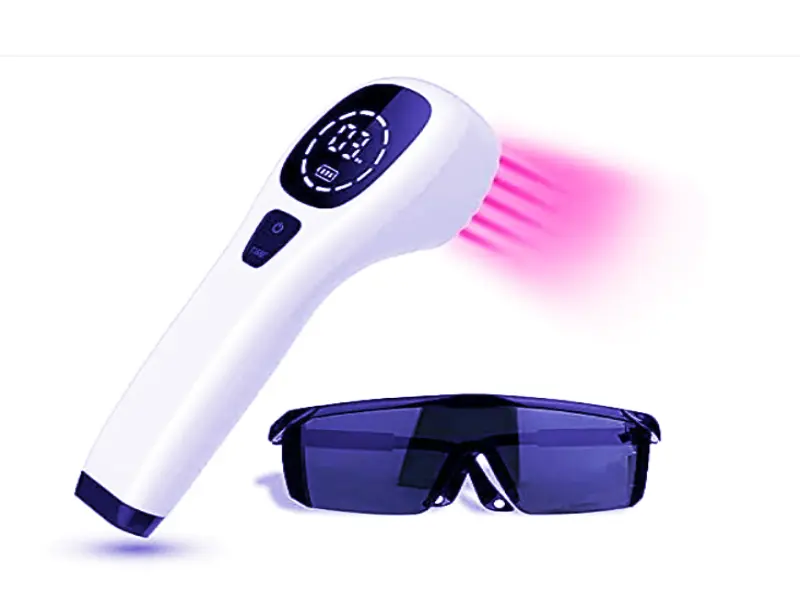
The KTS Handheld System is an Amazon favorite due to its crystal-clear LED control screen and reliable dual-wavelength medical architecture, designed for rapid home-based nerve pain management.
- The Clinical Edge: This device balances two highly focused $808nm$ invisible laser diodes with twelve rich $650nm$ red light arrays. Moreover, the integrated smart LED display allows seniors or diabetic patients to instantly monitor power levels, countdown timers, and operational modes with absolute visual clarity.
- Home-Use Safety Features: Features an unyielding countdown safety timer that visually and audibly tracks your therapy progress. However, despite its gentle continuous wave output, users must refrain from looking directly into the diode array when the device is fully active.
- Pros: Incredible user interface with high-contrast screen; lightweight ergonomic handle grip; highly responsive touch controls.
- Cons: Features two $808nm$ diodes, meaning it takes slightly longer to saturate large tissue muscle groups compared to 5-diode models.
4. Zelvory Dual-Wavelength Cold Laser Therapy Device
Best for Balanced Deep-Tissue and Joint Therapy (4x808nm + 14x650nm)
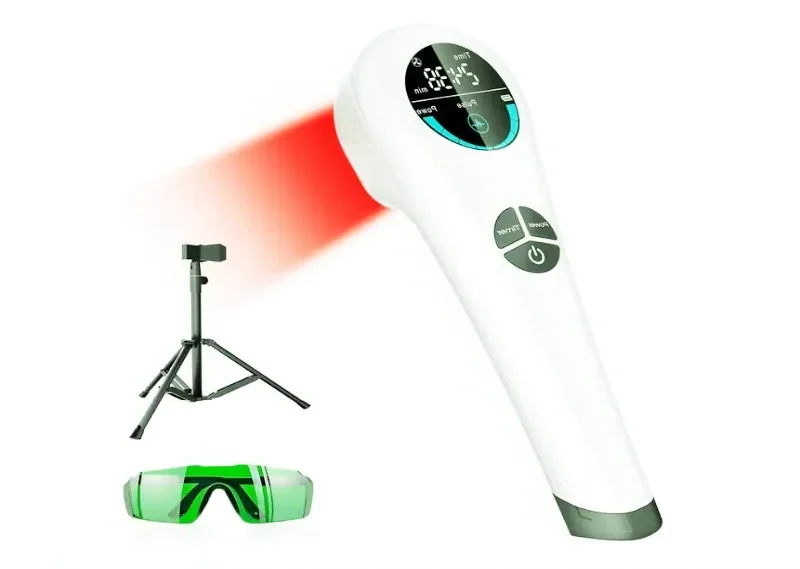
The Zelvory Handheld Therapy Wand is a highly efficient, dual-wavelength medical device rapidly gaining popularity on Amazon for its robust diode density. Combining four deep-penetrating $808nm$ near-infrared lasers with fourteen structural $650nm$ red light outputs, it targets both local blood circulation and deep nerve root discomfort simultaneously.
- The Clinical Edge: Featuring an impressive count of four invisible $808nm$ laser beams, this wand delivers deep cellular energy straight to underlying joint capsules and damaged peripheral paths. Because it is built for both human recovery and pet care, it offers incredible everyday utility for the entire household. It works actively to lower local inflammation while boosting raw blood flow in the lower extremities.
- Home-Use Safety Features: Built with an easy-grip ergonomic structure, it ensures secure handling even for elderly individuals experiencing minor hand numbness. However, because the invisible near-infrared beams generate substantial energy below the skin surface, users must strictly stick to the recommended 10-to-15-minute session timers.
- Pros: Highly effective 4x808nm and 14x650nm configuration; exceptional value for a multi-diode wand; lightweight and travel-friendly casing.
- Cons: Lacks a highly detailed, advanced LCD program screen, relying instead on a streamlined, simpler button interface.
5. SINORIKO Handheld Cold Laser Therapy Device
Best Multi-Mode Budget-Friendly Device for Daily Maintenance (3x808nm + 13x650nm)
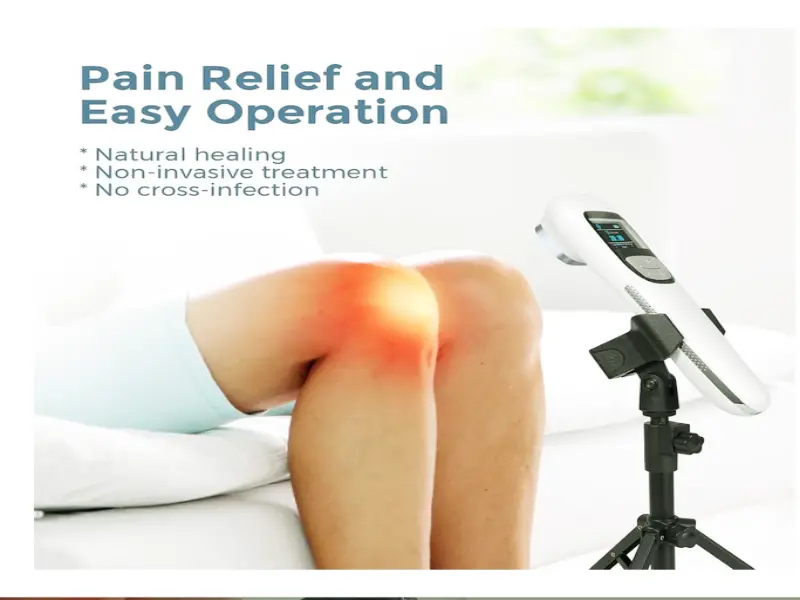
The SINORIKO cold laser device is a highly dependable, budget-conscious staple on Amazon that features adjustable power settings and custom timers, making daily neuropathic management simple and affordable.
- The Clinical Edge: Equipped with three clinical $808nm$ near-infrared lasers and thirteen $650nm$ surface red lights, this handheld unit delivers targeted cellular therapy. Moreover, it features 4 adjustable power levels and 4 custom timer settings, allowing you to tailor your therapy sessions precisely to your daily comfort levels.
- Home-Use Safety Features: The custom multi-tier timer prevents skin over-exposure by systematically shutting down the light arrays once the chosen therapy block finishes. It requires consistent manual sweeping across the foot or back to achieve broad-spectrum circulation enhancements.
- Pros: 4 distinct power levels and timer adjustments; highly affordable entry point into high-ticket laser care; excellent rechargeable battery lifespan.
- Cons: Charging cable is proprietary, meaning you must protect the original cord to ensure long-term device reusability.
Step-by-Step Guide: Safe Home Treatment Protocols
To maximize the benefits of the best cold laser therapy devices for diabetic neuropathy, consistency and safety must guide your daily treatment routine. Moreover, establishing a structured protective habit ensures optimal nerve recovery without risking surface irritation. Choosing one of the best cold laser therapy devices for diabetic neuropathy requires careful consideration of wavelength options. You should cross-reference your routine with the CDC Official Guidelines on Diabetic Foot Care and Safety before activating the laser arrays at home. This ensures your skin is perfectly prepared for home-use clinical modalities. It also guarantees your feet are completely free of hidden open lesions.
- Thoroughly Clean and Dry Your Skin: Before activating your laser device, wash your feet with a mild soap. Pat them completely dry afterward. Ensure no lotions, thick creams, or topical pain rubs remain on the skin. These compounds can easily deflect or absorb the light photons.
- Always wear the Protective Goggles: Even if the invisible $808nm$ light appears off, it emits powerful invisible energy. This intense energy can permanently damage your retinas. Always secure your protective eyewear before powering on the unit.
- Monitor Session Duration and Skin Sensitivity: Always adhere strictly to the recommended treatment time per target zone to avoid tissue overheating. Furthermore, continuously check your skin for any unexpected redness, warmth, or irritation during and after the session. If you experience sensory changes or localized discomfort, consult your healthcare provider and cross-reference your routine with the American Diabetes Association guidelines on neuropathy management.
Frequently Asked Questions (FAQs): Best Cold Laser Therapy Devices for Diabetic Neuropathy
Ans. No, true cold laser therapy is completely painless and non-thermal. Unlike surgical cosmetic lasers that cut tissue, LLLT devices do not generate noticeable heat. You will feel the plastic device head against your skin. However, you will not feel any burning or stinging sensations. This makes it exceptionally safe for desensitized nerves.
Ans. For optimal results, most clinical protocols recommend using the device 3 to 4 times per week for the first month. Each targeted zone should be treated for approximately 10 to 15 minutes. Moreover, once your nerve discomfort begins to stabilize, you can easily maintain progress. You can safely scale back to a maintenance routine of 1 to 2 sessions per week.
Ans. Some individuals experience a soothing reduction in burning sensations after their very first session due to the immediate release of nitric oxide. However, deep structural nerve repair is a gradual biological process. Most users notice significant improvements in sensation and a reduction in sharp pains after 4 to 6 weeks of consistent, disciplined use.
Ans. Yes, absolutely. Cold laser therapy (LLLT) is a non-invasive, drug-free modality that does not interact with oral medications or topical pain creams. Many podiatrists recommend combining laser therapy with your prescribed routine. It systematically accelerates blood circulation. This active blood flow helps your body deliver essential nutrients to the damaged nerves more efficiently. However, you should never stop taking your prescribed diabetes or nerve medications without consulting your primary care physician first.mary care physician first.
Final Verdict: Best Cold Laser Therapy Devices for Diabetic Neuropathy
Investing in your health requires picking equipment that matches your lifestyle. If you need deep, targeted relief for localized nerve roots around the ankles and toes, the KTS Handheld Cold Laser offers the most balanced clinical performance. However, some users prefer a luxurious, hands-free session. If you want to treat your entire foot while relaxing, the DGXINJUN Infrared & Red Light Therapy Wrap stands out as the ultimate premium investment. It is perfect for long-term health and mobility. Moreover, while these advanced LLLT devices work wonders for passive nerve repair, real metabolic control requires active movement. You should read our comprehensive guide on Kettlebell Strength Training for Diabetics: Boost Muscle and Control Blood Sugar for a complete active-passive blueprint. This detailed guide reveals exactly how lifting weights permanently optimizes your glycemic response.